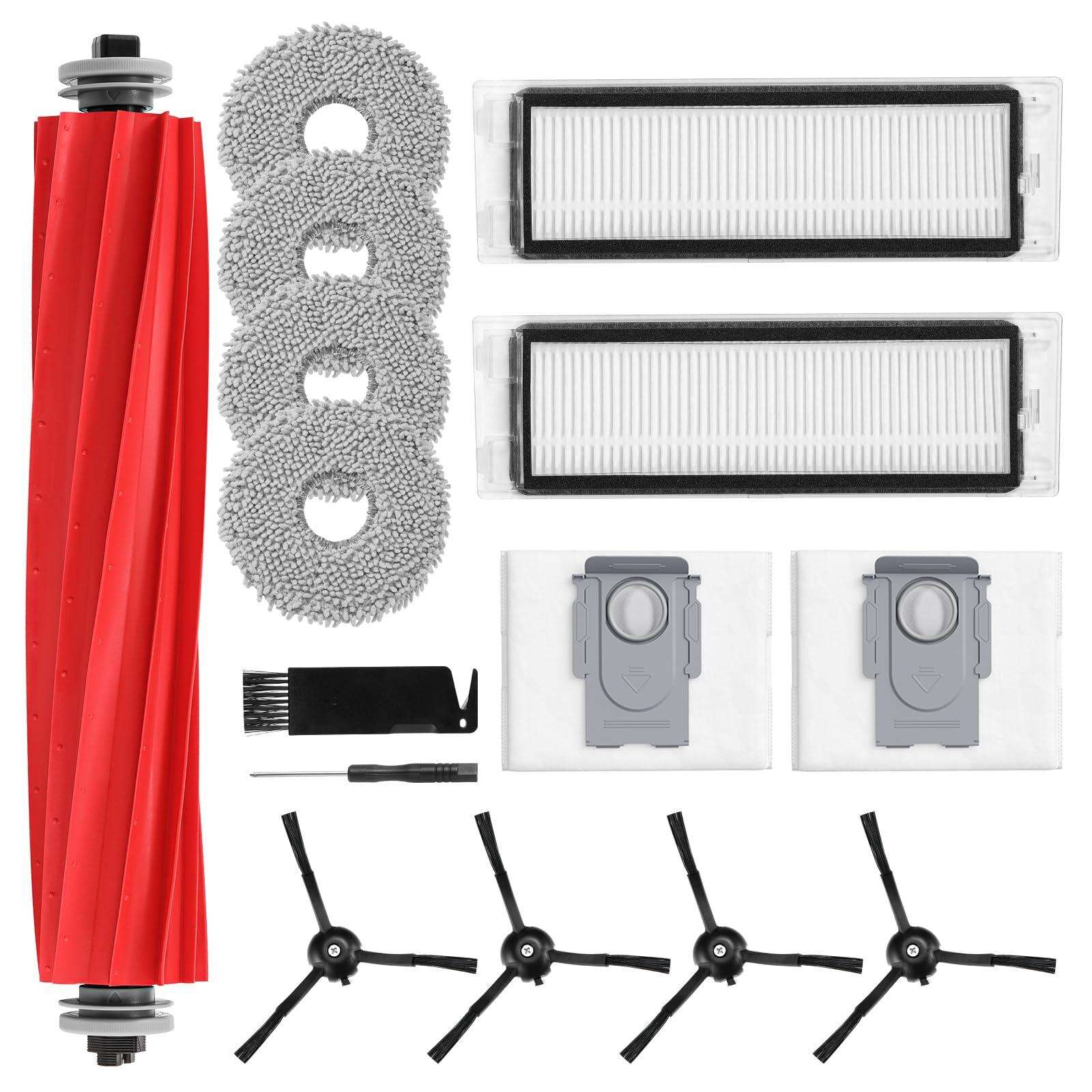

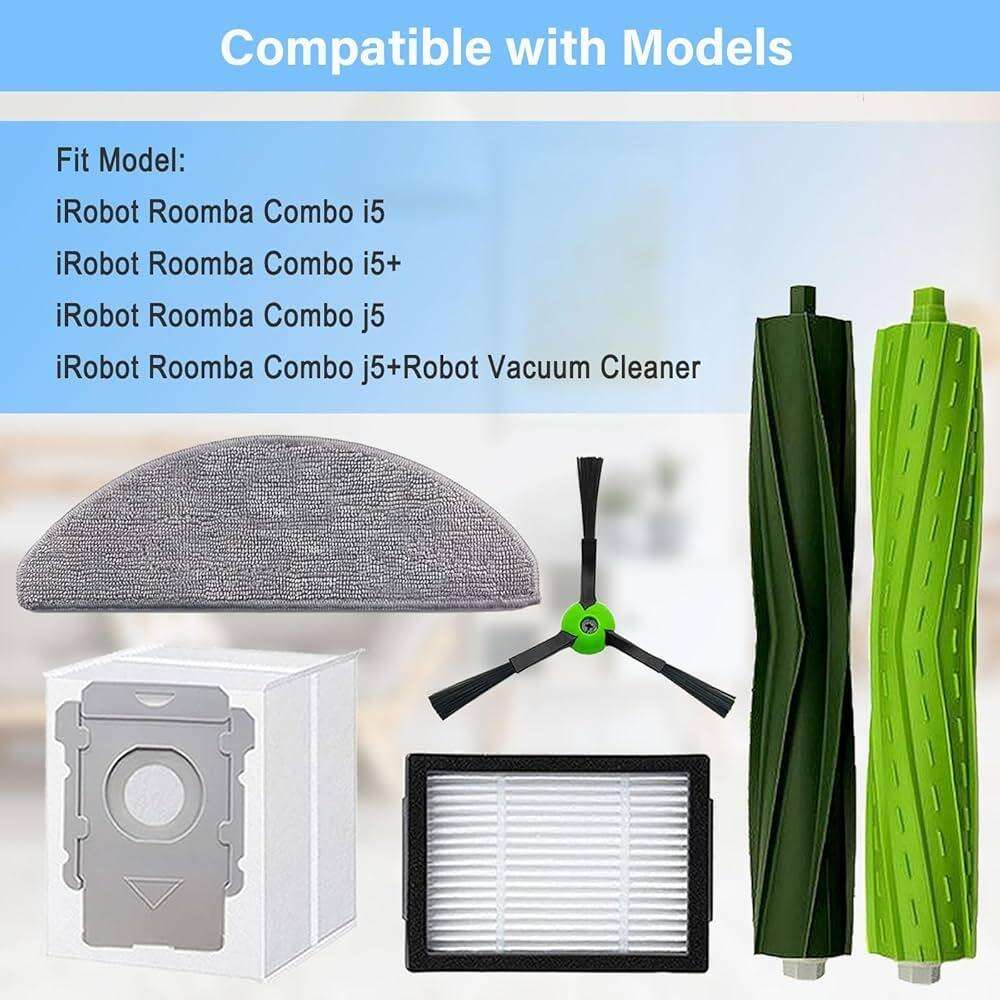
For importers operating in the consumer electronics and home appliance space, sourcing OEM robot vacuum parts at competitive prices without sacrificing quality is one of the most persistent operational challenges in today's supply chain. As robot vacuum technology advances rapidly, the demand for high-quality replacement components — from brushes and filters to docking station accessories and sensor covers — has grown in parallel. Importers who fail to implement rigorous quality assurance processes often face product returns, customer complaints, and reputational damage that far outweigh any short-term cost savings.
The global market for OEM robot vacuum parts has expanded significantly over the past five years. More households worldwide are adopting robot vacuum cleaners, which drives repeat purchases of consumables and replacement accessories. This creates a real business opportunity for importers, but it also means the field is crowded with suppliers offering varying levels of component quality, material integrity, and manufacturing consistency. Understanding how to systematically evaluate and ensure quality before goods arrive at your warehouse is the difference between building a sustainable import business and managing a constant stream of post-sale problems.

Understanding What OEM Robot Vacuum Parts Quality Actually Means
Defining OEM Standards in the Robot Vacuum Category
When we refer to OEM robot vacuum parts, we are talking about components manufactured to match the original design specifications of a specific robot vacuum model. Unlike generic or aftermarket parts, OEM components are expected to meet exact dimensional tolerances, material compositions, and performance thresholds set by the original equipment manufacturer. For importers, understanding this distinction is foundational because it shapes every quality benchmark you apply during supplier evaluation and product inspection.
Quality in OEM robot vacuum parts is not just about whether a component physically fits a device. It encompasses durability under repeated use cycles, electrical safety for battery-integrated parts, filtration efficiency for HEPA filters, suction brush bristle density and resilience, and the chemical safety of plastics that may come into contact with floor surfaces or household environments. Each of these dimensions requires a different testing approach, which is why a comprehensive quality framework must be multi-layered rather than relying on a single point of inspection.
Importers who treat all OEM robot vacuum parts as interchangeable commodities are likely to encounter inconsistency across production batches. A supplier may deliver excellent components in the first shipment but allow quality drift in subsequent orders if there is no ongoing monitoring mechanism in place. Establishing clear, documented OEM quality standards at the outset of any supplier relationship is therefore the critical first step.
The Most Common Quality Failures in OEM Robot Vacuum Parts
Understanding where OEM robot vacuum parts most often fail helps importers focus their quality assurance efforts where they matter most. One of the most frequently reported issues is dimensional inaccuracy — parts that are slightly off-specification in ways that prevent proper fitting or reduce product lifespan. This is particularly common in brush roll mounting hardware, dustbin seals, and docking connector pins.
Material substitution is another significant quality failure pattern. Manufacturers under cost pressure may swap specified polymer grades for lower-cost alternatives that look identical but perform differently under thermal stress or UV exposure. Filters are especially susceptible to this issue, where the filtration layer may appear to meet specification visually but fails to achieve the particle capture efficiency promised. For importers relying on OEM robot vacuum parts to maintain brand reputation, undetected material substitution can cause widespread product failure in the field.
Electrical components present their own category of risk. Charger assemblies, sensor modules, and battery contact parts must comply with relevant safety certifications in destination markets. Substandard electrical OEM robot vacuum parts not only create customer dissatisfaction but can expose importers to serious liability and regulatory consequences. Knowing the specific failure modes that apply to the component categories you are sourcing is essential to building an effective quality inspection protocol.
Establishing a Robust Supplier Qualification Process
Conducting Factory Audits Before Committing to Production
For importers serious about the quality of OEM robot vacuum parts, the qualification process must begin before a single purchase order is placed. A pre-production factory audit examines the supplier's manufacturing infrastructure, quality management systems, incoming material inspection processes, and production environment controls. It provides direct evidence of whether the supplier has the operational capability to consistently produce components that meet OEM specifications.
During a factory audit for OEM robot vacuum parts, importers or their appointed auditors should evaluate critical areas such as injection molding precision, surface treatment consistency, assembly line quality controls, and the supplier's own internal defect tracking metrics. Suppliers who maintain ISO 9001 certification or equivalent quality management systems are generally more reliable partners, though certification alone is not a substitute for direct audit observations.
It is equally important to assess the supplier's traceability systems. When quality issues arise in the field, you need to be able to trace a defective OEM robot vacuum part back to its specific production batch, raw material lot, and manufacturing date. Suppliers without robust traceability capabilities make root cause analysis nearly impossible, which slows down corrective action and increases the financial impact of quality escapes.
Using Golden Samples and Technical Specifications as Binding References
One of the most effective tools importers can use to anchor quality in OEM robot vacuum parts procurement is the golden sample process. A golden sample is a physically verified reference unit that meets all dimensional, material, and performance specifications. It is approved by both the importer and the supplier before production begins, and it serves as the definitive benchmark against which all production output is measured.
Alongside physical golden samples, importers should provide or request detailed technical specification sheets for every category of OEM robot vacuum parts they source. These documents should capture critical dimensions with tolerances, approved material grades, surface finish requirements, and any applicable performance test thresholds. Incorporating these specifications into the supply agreement as binding contractual annexes removes ambiguity and gives importers clear grounds for rejection if non-conforming goods are delivered.
The golden sample and specification document together create a quality anchor that survives personnel changes on either side of the relationship. When a new production manager joins the supplier's team or when your own sourcing team changes, the documented standards remain constant. This continuity is especially valuable when sourcing OEM robot vacuum parts across multiple product lines simultaneously.
Implementing Pre-Shipment Inspection and Testing Protocols
Designing an Effective AQL Sampling Plan for Robot Vacuum Components
Pre-shipment inspection is a non-negotiable quality gate for importers sourcing OEM robot vacuum parts at scale. The most widely used framework for sampling-based inspection is the Acceptable Quality Level, or AQL, methodology. Under AQL-based inspection, inspectors sample a statistically determined number of units from a production batch and measure the defect rate against predefined critical, major, and minor defect thresholds. If the defect rate exceeds the acceptable limit, the batch is rejected pending corrective action.
For OEM robot vacuum parts, the assignment of defect categories requires careful judgment. A filter with a torn membrane should be classified as a critical defect due to its direct impact on device performance and end-user health claims. A minor cosmetic scratch on an internal component housing might be classified as a minor defect with a more lenient tolerance. Getting this classification right ensures that your AQL plan focuses inspector attention where failure consequences are highest.
Importers should work with third-party inspection agencies experienced in consumer electronics and small appliance components when internal inspection capacity is not available. Independent inspectors bring objectivity that internal supplier quality teams cannot always guarantee, and their reports carry credibility with logistics providers, retail customers, and regulators who may request evidence of pre-shipment inspection for OEM robot vacuum parts.
Functional and Performance Testing Beyond Visual Inspection
Visual inspection alone is insufficient for ensuring the quality of OEM robot vacuum parts with functional performance requirements. Filters must be tested for actual particle filtration efficiency. Brush rolls must be evaluated for bristle retention strength and rotational balance. Battery contact assemblies require continuity and voltage drop testing. Without functional tests, importers may ship visually acceptable components that fail under real-world operating conditions.
Developing a functional test protocol specific to each component category you source is a meaningful investment that pays dividends through reduced field returns and stronger customer relationships. Some importers establish their own incoming goods inspection labs, while others partner with third-party testing laboratories that hold accreditation relevant to their destination market requirements. Either approach is valid as long as the test methods are appropriate to the OEM robot vacuum parts being evaluated.
Performance testing data also creates a valuable quality record over time. By tracking functional test results across production batches, importers can identify trends that signal process drift at the supplier's factory before those trends translate into shipment-level failures. This proactive monitoring approach is especially useful for high-volume OEM robot vacuum parts categories where any shift in quality has immediate commercial consequences.
Building Long-Term Supplier Relationships That Sustain Quality
Communicating Quality Expectations Through Ongoing Feedback Loops
Quality assurance in OEM robot vacuum parts is not a one-time activity performed at the start of a supplier relationship. It requires continuous communication, shared data, and a feedback culture that reinforces quality expectations at every production cycle. Importers who share field return data, customer complaint analysis, and inspection findings with their suppliers on a regular cadence create a feedback loop that drives continuous improvement rather than reactive firefighting.
Structured quality review meetings — whether conducted in person, via video conference, or through formal corrective action report exchanges — keep both parties aligned on performance trends and improvement priorities. For OEM robot vacuum parts suppliers producing across multiple customer accounts, importers who maintain active quality dialogue are typically prioritized when production capacity is constrained or when premium raw materials are in short supply.
Setting up a formal corrective and preventive action process, often referred to as CAPA, gives both the importer and the supplier a systematic way to address root causes of quality failures rather than simply replacing defective units. A strong CAPA culture is one of the most reliable indicators that a supplier takes quality in OEM robot vacuum parts seriously at an organizational level.
Contractual Quality Provisions That Protect Importers
Beyond operational quality practices, importers must ensure that their supply contracts contain provisions that formally protect their quality interests. At minimum, contracts for OEM robot vacuum parts should specify quality standards by reference to golden samples and technical specifications, define inspection rights and procedures, establish defect liability and remediation terms, and include provisions for handling non-conforming goods including return, replacement, or credit mechanisms.
Warranty terms for OEM robot vacuum parts should reflect the expected product lifecycle of the components and align with the warranty commitments the importer extends to its own downstream customers. Misalignment between supplier warranty terms and customer-facing warranty commitments creates financial exposure that is entirely avoidable with proper contract structuring.
Intellectual property clauses are also important when sourcing OEM robot vacuum parts, particularly when proprietary designs or branded specifications are involved. Ensuring that the supplier's rights to use design specifications are limited to production for your account, and that tooling ownership is clearly documented, prevents future complications if the supplier relationship changes or ends.
Navigating Regulatory Compliance for OEM Robot Vacuum Parts in Export Markets
Understanding Certification Requirements by Destination Market
Regulatory compliance is an often underestimated dimension of quality assurance for OEM robot vacuum parts. Different destination markets impose different certification and safety requirements on electrical and electronic components. The European Union requires CE marking compliance including relevant directives covering electrical safety, electromagnetic compatibility, and RoHS compliance for restricted substances. The United States market requires FCC compliance for any component with radio frequency characteristics and compliance with relevant UL standards for electrical parts.
Importers must understand which certification requirements apply to each category of OEM robot vacuum parts they are bringing to market, and they must ensure that their suppliers can provide test reports from accredited laboratories demonstrating compliance. Accepting a supplier's self-declaration without verified third-party test documentation exposes importers to customs clearance delays, regulatory enforcement actions, and forced product recalls.
Chemical compliance is equally important. Many destination markets restrict specific substances in plastic components, packaging materials, and electronic assemblies. REACH regulations in the EU, California Proposition 65 in the US, and equivalent frameworks in other markets all set limits on substances that may be present in OEM robot vacuum parts. Importers should require material safety data sheets and chemical compliance declarations from suppliers to support their own compliance documentation.
Maintaining Documentation That Supports Market Access and Customer Confidence
Beyond meeting regulatory minimums, maintaining comprehensive quality and compliance documentation serves a broader commercial purpose for importers of OEM robot vacuum parts. Retail customers, e-commerce platform operators, and institutional buyers increasingly require documentary evidence of quality management practices before granting listing access or procurement contracts. Having organized, up-to-date documentation covering factory audits, golden sample approvals, inspection reports, and certification test results positions importers as credible, professional suppliers in competitive markets.
Building a documentation management system that links each shipment of OEM robot vacuum parts to its corresponding quality records enables rapid response when questions arise from customers or regulators. This traceability infrastructure is an asset that grows in value over time and supports business development by demonstrating operational maturity to prospective partners.
Importers who invest in documentation discipline also benefit from faster resolution of any disputes with suppliers. When a quality issue is backed by documented inspection evidence and clear contractual terms, the conversation with a supplier about remediation is far more productive than when both parties are working from memory and informal understandings. Documentation is therefore both a quality tool and a commercial risk management tool for anyone sourcing OEM robot vacuum parts at meaningful volume.
FAQ
What is the most important first step for importers to ensure quality in OEM robot vacuum parts?
The most important first step is establishing a detailed quality specification framework before engaging any supplier. This includes defining what OEM-level quality means for each component category, creating or approving golden samples, and documenting technical specifications that serve as binding references throughout the supply relationship. Without this foundation, inspection and testing activities lack clear pass/fail criteria and quality enforcement becomes subjective and inconsistent.
How often should importers conduct factory audits for OEM robot vacuum parts suppliers?
For established supplier relationships with a strong quality track record, an annual factory audit combined with ongoing data-driven monitoring is typically appropriate. For newer suppliers or those with recent quality incidents, more frequent audits — potentially every six months — are warranted until confidence is established. The audit frequency should also increase whenever a supplier undergoes significant changes such as facility relocation, major equipment upgrades, or key management personnel changes.
Are third-party inspection agencies necessary for every shipment of OEM robot vacuum parts?
Not necessarily for every shipment, but third-party inspection is strongly recommended for new suppliers, new product introductions, and any batch where risk indicators are present such as compressed production timelines or recent supplier quality issues. For suppliers with long track records of consistent performance, importers may adopt a risk-based inspection frequency that concentrates third-party oversight on higher-risk situations while relying more on supplier-provided quality data for routine shipments.
What regulatory certifications should importers prioritize when sourcing OEM robot vacuum parts for European and US markets?
For European markets, CE marking compliance is the primary certification requirement, covering directives relevant to the specific component type including Low Voltage Directive for electrical parts, EMC Directive, and RoHS Directive for restricted substances. For the US market, FCC authorization is required for components with wireless or RF characteristics, while electrical safety compliance to relevant UL or IEC standards is expected by major retail and e-commerce platforms. Chemical compliance documentation addressing REACH in the EU and applicable substance restrictions in the US should also be maintained for all OEM robot vacuum parts regardless of destination market.
Table of Contents
- Understanding What OEM Robot Vacuum Parts Quality Actually Means
- Establishing a Robust Supplier Qualification Process
- Implementing Pre-Shipment Inspection and Testing Protocols
- Building Long-Term Supplier Relationships That Sustain Quality
- Navigating Regulatory Compliance for OEM Robot Vacuum Parts in Export Markets
-
FAQ
- What is the most important first step for importers to ensure quality in OEM robot vacuum parts?
- How often should importers conduct factory audits for OEM robot vacuum parts suppliers?
- Are third-party inspection agencies necessary for every shipment of OEM robot vacuum parts?
- What regulatory certifications should importers prioritize when sourcing OEM robot vacuum parts for European and US markets?