
 EN
EN
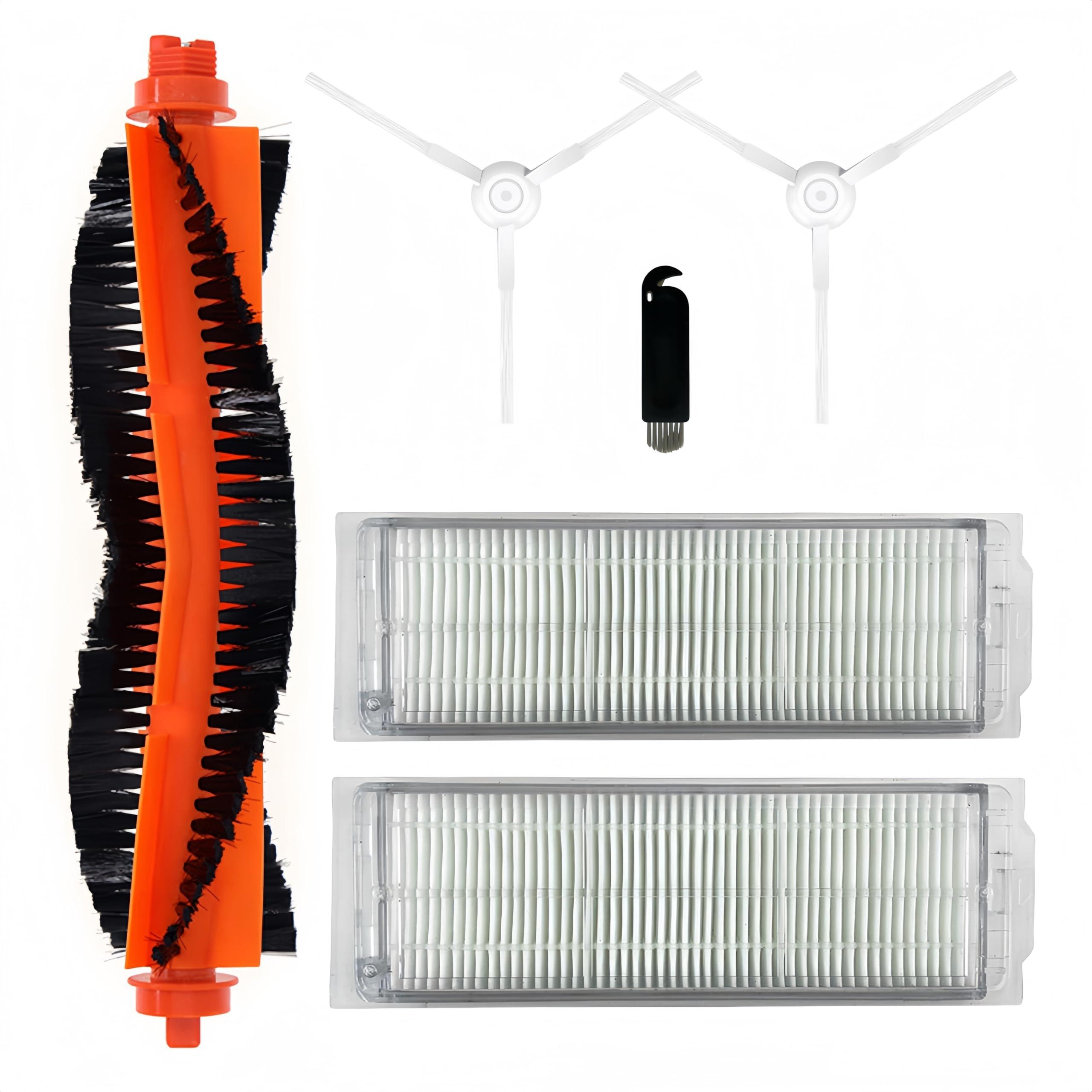
For distributors operating in the home appliance and robotics accessories space, placing a large purchase order without adequate product evaluation is a significant financial risk. When it comes to robot vacuum filters, the stakes are even higher because these components directly influence customer satisfaction, product return rates, and brand reputation. A filter that underperforms in the field will generate complaints, damage trust with retail partners, and erode the margins that make distribution worthwhile in the first place. Understanding how to systematically evaluate robot vacuum filters before committing to large volumes is not just smart procurement—it is essential business strategy.
The market for robot vacuum filters has expanded considerably in parallel with the global growth in robotic cleaning device adoption. Consumers now expect replacement accessories to match or exceed OEM quality, especially in categories like filtration where performance is directly felt during use. Distributors who can reliably source and supply high-quality robot vacuum filters gain a competitive edge, but that advantage only materializes when evaluations are thorough and criteria are well-defined before ordering at scale. This guide walks through the core evaluation dimensions every distributor should apply before making bulk purchasing decisions.
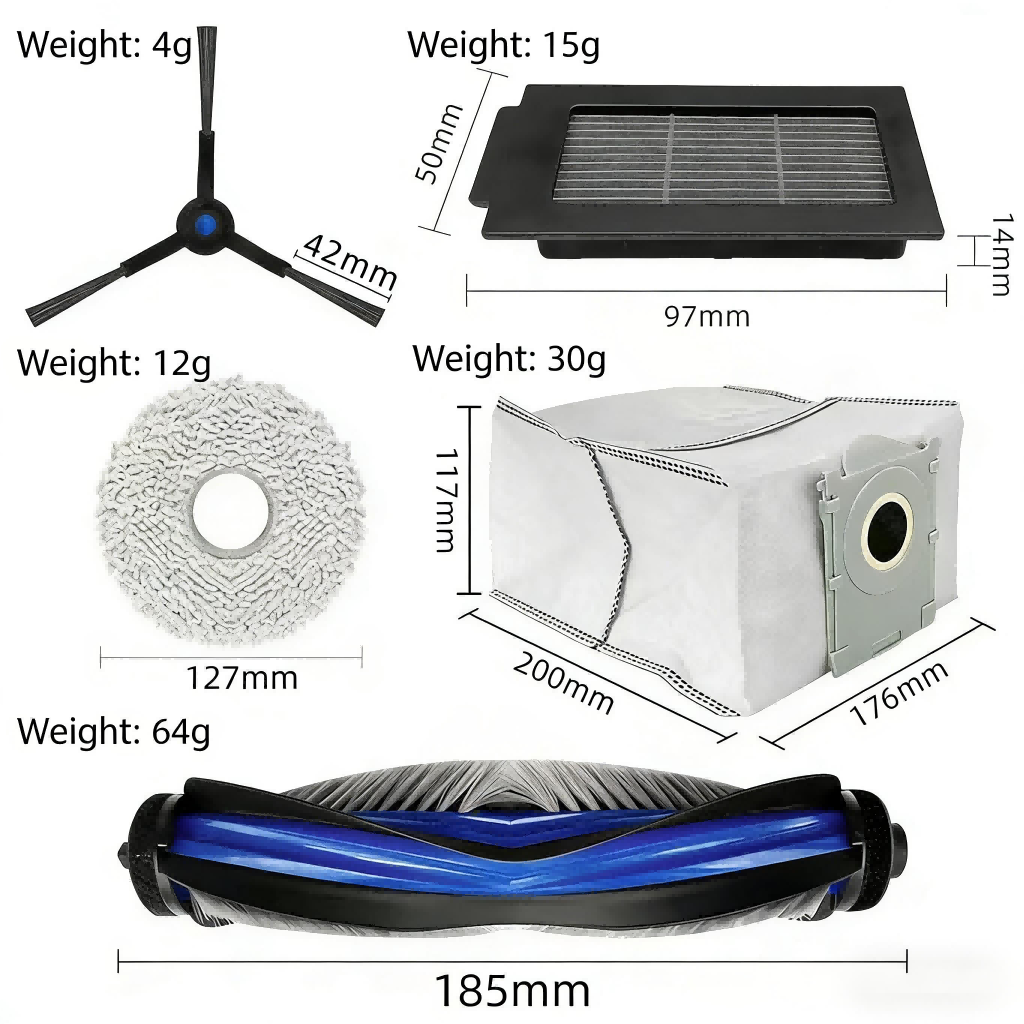
Understanding What Makes Robot Vacuum Filters Perform Well
Filtration Efficiency and Particle Capture Standards
The primary job of robot vacuum filters is to trap airborne particles, allergens, and fine dust that would otherwise be recirculated into the indoor environment. High-efficiency filtration depends on the density and arrangement of filter media fibers. When evaluating robot vacuum filters, distributors should request documentation on particle capture rates, particularly for PM2.5 and sub-micron particles that affect air quality in homes with allergy sufferers or pets.
Filters that lack this technical backing often fail to deliver consistent performance across different home environments. A distributor who can verify filtration efficiency data not only reduces customer complaints but also gains a persuasive selling point for health-conscious end-users. Whenever possible, request actual lab test reports rather than marketing summaries, since real test data reflects manufacturing consistency rather than theoretical capability.
Filtration efficiency also varies across the life of the filter. Some robot vacuum filters perform well initially but degrade rapidly, causing suction loss and reduced air quality within weeks of use. Evaluating not just initial performance but sustained performance over simulated use cycles is a key differentiator between surface-level and thorough distributor assessments.
Filter Media Composition and Build Quality
The material used to construct robot vacuum filters has a direct bearing on durability, airflow resistance, and washability. HEPA-grade nonwoven materials, for instance, offer much better particle retention than generic foam alternatives. Distributors should physically examine samples to assess fiber consistency, frame rigidity, and whether the sealing layer between the media and the housing is adequate to prevent bypass leakage.
Build quality also extends to the structural frame that holds the filter media in place. Weak or poorly molded plastic frames can crack under repeated installation and removal cycles, which is a common cause of warranty claims in the robot vacuum accessories category. When holding a sample filter, check whether the frame flexes excessively under light pressure and whether seams are clean and complete without visible gaps.
Washable robot vacuum filters deserve special attention during evaluation because their durability requirements are more demanding. A filter marketed as washable must maintain its structural integrity and filtration effectiveness after multiple water exposure cycles. Distributors should request wash cycle testing data or conduct their own sample tests to confirm that washability claims are genuine rather than aspirational.
Compatibility Verification as a Pre-Order Discipline
Model-Specific Fit Testing With Physical Samples
One of the most common and costly mistakes distributors make is ordering robot vacuum filters in volume before verifying physical compatibility with the target device models. Dimensional tolerances in robotic vacuum housings are tight, and even a millimeter of deviation in filter geometry can result in poor seating, air bypass, or inability to close the dust compartment properly. Requesting pre-shipment samples and testing them in actual devices is a non-negotiable evaluation step.
Model coverage documentation should always be verified against your own device database rather than accepted at face value. Suppliers sometimes list compatibility broadly without accounting for regional firmware variants or manufacturing revisions that altered filter compartment dimensions. Distributors with access to multiple device units should test samples across the full range of listed compatible models before confirming an order.
Physical fit testing also reveals secondary compatibility issues such as whether the filter installation and removal process remains user-friendly. A filter that fits technically but requires excessive force to install will generate customer service inquiries and negative reviews. This practical dimension of compatibility is just as important as dimensional accuracy when evaluating robot vacuum filters for retail distribution.
Cross-Referencing SKU Data and Market Coverage
Distributors operating across multiple markets or product categories need robot vacuum filters that cover a broad range of SKUs to justify the logistical investment in stocking and managing the product line. Before a large order, map the supplier's compatibility claims against your top-selling device models and anticipated customer demand. Gaps in coverage can undermine the commercial rationale for the order even if the product quality is sound.
SKU alignment also affects packaging and labeling decisions. If a single filter design is compatible with multiple device models, consolidated packaging that communicates multi-model fit can simplify your inventory while improving shelf appeal. Evaluate whether the supplier supports this kind of packaging flexibility, as it directly impacts your downstream distribution efficiency.
Cross-referencing should extend to aftermarket accessory bundling opportunities as well. Robot vacuum filters are frequently sold alongside main brushes, side brushes, and mop pads in consumable accessory kits. Confirming that filters from your prospective supplier can be combined with complementary accessories in a cohesive product offering is an often overlooked but commercially valuable evaluation criterion.
Supplier Evaluation Criteria Beyond the Product Itself
Manufacturing Consistency and Quality Control Processes
Evaluating robot vacuum filters as a product is only one side of the equation. The other side is evaluating the supplier's manufacturing discipline and quality management systems. Inconsistent production quality means that samples may perform well but production batches can vary significantly, leaving distributors exposed to return waves and customer dissatisfaction after large orders ship.
Request documentation on quality control checkpoints during production, including incoming material inspection, in-process dimensional checking, and outgoing product testing. Suppliers who can demonstrate systematic quality management are significantly lower risk than those who rely on informal inspection routines. Certifications such as ISO 9001 provide a baseline reference, but direct factory assessment or third-party audit reports offer more concrete assurance.
Batch-to-batch consistency is particularly important for robot vacuum filters because customers often purchase replacements over extended periods. If filter quality shifts between production runs, customers who were satisfied with their first replacement may be disappointed by a subsequent purchase, creating churn and brand erosion that is difficult for distributors to manage after the fact.
Lead Time, Minimum Order Quantity, and Scalability
Before committing to large orders of robot vacuum filters, distributors must align the supplier's operational capacity with their own business rhythm. Lead times that are unpredictable or excessively long will create stockout situations that cost sales and damage relationships with retail partners. Confirm both the standard lead time and the realistic lead time during peak production seasons before structuring your purchase plan.
Minimum order quantities can create cash flow constraints if they are set too high relative to your actual demand forecast. Evaluate whether the supplier is willing to negotiate initial order quantities to allow for a market testing phase before scaling up. A supplier who insists on large MOQs for an unproven product relationship represents a higher financial risk, even when the product itself evaluates well.
Scalability in the other direction also matters. If a distributor's demand for robot vacuum filters grows rapidly due to a successful retail launch, can the supplier increase production capacity within a reasonable timeframe? Asking direct questions about manufacturing capacity and documented scale-up procedures reveals whether a supplier can support your growth ambitions or become a bottleneck.
Practical Evaluation Methods Distributors Can Execute Independently
Structured Sample Testing Protocols
Distributors do not need a laboratory to conduct meaningful evaluations of robot vacuum filters. A structured sample testing protocol using available equipment and multiple device units can generate actionable quality data before placing an order. Begin by documenting the physical condition of each sample, noting any visible defects in media, frame, or sealing. Then install the filter in a compatible device and run standardized cleaning cycles on a measured test surface with known debris quantities.
Measuring suction performance before and after filter installation, and comparing it against a known baseline, gives you real-world airflow data that is directly relevant to customer experience. Many distributors overlook this simple step and rely solely on supplier-provided claims, which introduces avoidable risk. Even a basic digital manometer can provide useful pressure differential readings that help distinguish high-quality robot vacuum filters from marginal ones.
Simulate end-user misuse scenarios as part of your testing, including washing washable filters, reinstalling them without thorough drying, and using the device in high-debris environments. These stress tests reveal failure modes that would be invisible during normal operation testing. Documenting these results creates a reference library that helps your team make more confident decisions on future sourcing evaluations.
Gathering Feedback From Pilot Distribution Channels
Before committing to a full large-scale order of robot vacuum filters, consider placing a smaller pilot order and distributing samples through a limited channel—whether a regional distributor, a test retail partner, or a direct customer feedback program. Real-world feedback from end-users operating the filters in genuine daily use conditions provides validation that no amount of internal testing can replicate.
Structured feedback collection during the pilot phase should cover installation experience, perceived suction quality, filter lifespan in actual use, and any issues with washability or degradation. This qualitative data complements your technical testing results and often surfaces concerns that did not appear during controlled evaluations. Patterns in pilot feedback are highly predictive of post-launch return and complaint rates.
Pilot distribution also gives you the opportunity to assess packaging, labeling, and consumer communication quality for robot vacuum filters before they appear on shelves at scale. Poor packaging that damages filters during retail handling or misleading compatibility claims that confuse buyers are issues easier and cheaper to address at the pilot stage than after a full production run has been ordered and distributed.
FAQ
What should distributors prioritize when requesting samples of robot vacuum filters?
Distributors should prioritize physical compatibility testing with actual device units, filtration media quality assessment, and structural durability evaluation. Requesting samples that represent regular production quality rather than specially prepared showcase samples is essential, as this gives a realistic picture of what large order fulfillment will look like. Documentation of particle capture efficiency and batch consistency records should also be requested alongside physical samples.
How many samples are sufficient before placing a large order of robot vacuum filters?
For high-volume orders, evaluating at least five to ten samples from the same production batch provides statistically meaningful consistency data. Testing across multiple compatible device models is equally important, as robot vacuum filters that fit one model perfectly may have subtle issues with another. If the order spans multiple SKUs or compatibility profiles, sample testing should cover each variation rather than assuming cross-model performance is uniform.
Are third-party lab certifications reliable indicators of robot vacuum filter quality?
Third-party certifications such as HEPA standard compliance documents add credibility, but distributors should verify that certifications are current, cover the specific product being sourced, and were issued by a recognized testing body. Certifications obtained on prototype or early production runs may not reflect ongoing manufacturing quality. Treating certifications as a starting point for evaluation rather than a final confirmation is the most defensible procurement posture.
What contractual protections should distributors establish before large orders of robot vacuum filters?
Before committing to volume orders of robot vacuum filters, distributors should establish clear contractual terms covering product specifications with measurable tolerances, defect rate thresholds and associated remediation procedures, batch sampling inspection rights, and return or credit provisions for non-conforming goods. Written agreements that tie payment terms to quality acceptance milestones provide meaningful financial protection and incentivize suppliers to maintain consistent production standards throughout the fulfillment of large orders.
Table of Contents
- Understanding What Makes Robot Vacuum Filters Perform Well
- Compatibility Verification as a Pre-Order Discipline
- Supplier Evaluation Criteria Beyond the Product Itself
- Practical Evaluation Methods Distributors Can Execute Independently
-
FAQ
- What should distributors prioritize when requesting samples of robot vacuum filters?
- How many samples are sufficient before placing a large order of robot vacuum filters?
- Are third-party lab certifications reliable indicators of robot vacuum filter quality?
- What contractual protections should distributors establish before large orders of robot vacuum filters?