
 EN
EN
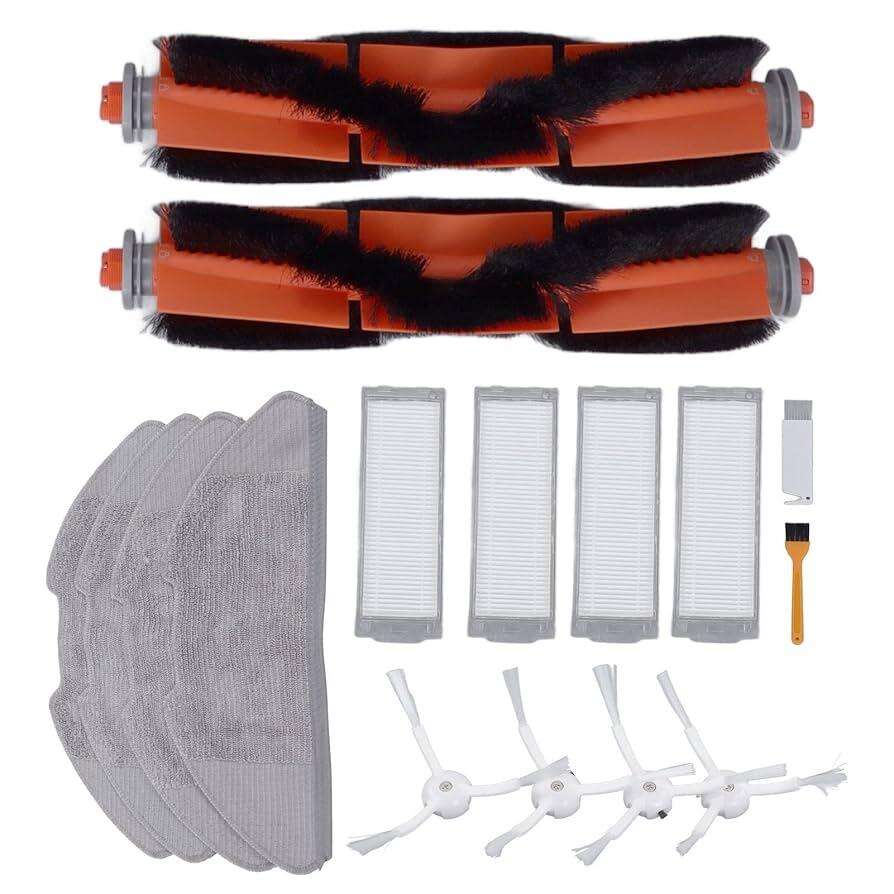
Finding the right supplier for vacuum robot parts is one of the most consequential decisions a distributor, service center, or OEM procurement team can make. Unlike a one-time purchase, a long-term supplier relationship shapes your inventory reliability, product quality, after-sales capability, and ultimately your reputation with end customers. The challenge is that the market for vacuum robot parts has grown increasingly crowded, making it harder to distinguish suppliers who can sustain performance over years from those who simply offer an attractive first quote.
This article walks through a structured framework for comparing vacuum robot parts suppliers specifically with long-term cooperation in mind. Whether you are sourcing consumables such as brushes and filters or more technical components like LIDAR modules and battery packs, the criteria you use during evaluation will determine whether the partnership grows stronger over time or becomes a recurring operational headache. Understanding how to assess suppliers across multiple dimensions — quality, catalog depth, logistics, communication, and scalability — is the foundation of smart, sustainable procurement.
Understanding What Long-Term Cooperation Actually Requires
The Difference Between a Transactional Supplier and a Strategic Partner
Many procurement managers default to price comparison when evaluating vacuum robot parts suppliers, but this approach is inherently short-sighted for long-term cooperation. A transactional supplier relationship is built around individual orders, with each transaction evaluated on its own terms. A strategic partnership, by contrast, involves shared planning, consistent quality standards, transparent communication, and mutual investment in each other's success.
When you are sourcing vacuum robot parts for ongoing distribution or service operations, supply disruption is one of your biggest risks. A transactional supplier may fulfill your first order excellently but fail to scale when your volume increases or when you need an emergency restocking. A strategic partner maintains buffer inventory, communicates proactively about lead time changes, and allocates capacity for your account because they see you as a long-term revenue source.
The practical implication is that your evaluation criteria need to go well beyond unit pricing. You should be asking whether the supplier has dedicated account management, whether they share production schedules or inventory data, and whether they have a track record of sustained performance with other long-term customers. These soft signals are often more predictive of a good partnership than a competitive price point alone.
Mapping Your Parts Requirements Before Supplier Comparison
Before comparing suppliers, it is essential to have a clear internal map of your vacuum robot parts needs. This means identifying which product lines and models you need to support, the volume and frequency of your orders, the criticality of each component type, and whether you need OEM-grade, aftermarket, or compatible-grade parts. Without this internal clarity, you risk evaluating suppliers against criteria that do not actually reflect your operational reality.
For example, a service center that primarily handles warranty and post-warranty repairs for high-end robot vacuum models will have very different requirements from a retailer that bundles replacement consumables with hardware sales. The former needs precision-matched vacuum robot parts with strict fitment guarantees and reliable technical documentation. The latter may prioritize packaging quality, bundling flexibility, and fast fulfillment over absolute component-level precision.
Mapping your requirements also helps you prioritize which supplier attributes to weight most heavily during comparison. If continuity of supply is your top concern, supplier financial stability and production redundancy matter more than whether they offer the lowest per-unit cost. If technical accuracy is paramount, certifications, testing documentation, and engineering support become the most important evaluation criteria for vacuum robot parts.
Evaluating Product Quality and Catalog Compatibility
Assessing Component Quality Standards for Vacuum Robot Parts
Quality is the non-negotiable foundation of any supplier relationship involving vacuum robot parts. A component that fails prematurely — a brush roller that loses bristles after two weeks, a filter that allows fine particulate to pass through, or a battery that does not hold a charge — damages not just the end customer's experience but your brand credibility as a distributor or service provider. Quality failures in consumable components are especially damaging because they are frequent-contact touchpoints that users notice immediately.
When evaluating quality, request sample units before committing to volume orders. Run the samples through practical use scenarios, or if you have a testing facility, subject them to stress testing. Check material quality against manufacturer specifications where available. Look for suppliers who can provide test reports, material safety data, or third-party certifications for their vacuum robot parts, as these documents signal internal quality discipline.
Equally important is consistency over time. Request information about the supplier's quality control process — do they use incoming material inspection, in-process quality checks, and finished goods testing? Ask whether their quality metrics are available and whether they have experienced significant product recall or defect issues with previous customers. A supplier's honesty about past quality challenges and how they were resolved is itself a quality signal for your long-term evaluation.
Catalog Depth and Model Coverage
A supplier's catalog breadth directly affects how useful they are as a long-term partner. If you distribute or service multiple robot vacuum brands and models, a supplier that covers only a narrow slice of compatible vacuum robot parts forces you to maintain multiple supplier relationships, which fragments your procurement operations and increases administrative overhead. The best long-term partners offer broad coverage that grows alongside the market.
Evaluate whether the supplier actively expands their catalog to cover newly released robot vacuum models within a reasonable time after product launch. Suppliers who lag six months to a year behind new model releases will leave you without compatible vacuum robot parts during the period when those models are most actively generating service demand. Ask suppliers directly about their product development timeline and how they prioritize new model additions.
Catalog organization and documentation quality are also meaningful indicators of operational maturity. A supplier who provides clean SKU-level compatibility charts, clear fitment guides, and high-quality product images is signaling that they invest in usability for their B2B customers. These details reduce your internal labor cost on procurement and reduce the risk of ordering errors — both of which matter over a multi-year partnership involving vacuum robot parts.
Comparing Supply Chain Reliability and Logistics Capability
Lead Time Consistency and Inventory Management
Lead time consistency is one of the most underrated criteria in supplier comparison for vacuum robot parts. A supplier who quotes ten days but consistently delivers in fifteen days creates downstream planning problems that compound over time. In contrast, a supplier who quotes twelve days and reliably meets that timeline allows you to build accurate reorder triggers, maintain leaner safety stock, and make confident commitments to your own customers.
Ask prospective suppliers about their average lead time for standard orders and how that lead time performs during peak demand seasons. Request data on their on-time delivery rate for the past twelve months. Suppliers who are reluctant to share this information often have performance they would prefer you not scrutinize. Transparency about lead time performance is a hallmark of suppliers who are confident in their operations and genuinely interested in building trust with long-term partners.
Also explore whether the supplier maintains finished goods inventory for fast-moving vacuum robot parts SKUs or whether they operate primarily on a make-to-order basis. Make-to-order can be acceptable for specialized or lower-volume components, but for high-frequency consumables, finished goods availability is critical for responsive supply. The best suppliers offer a hybrid model, holding strategic inventory for core items while producing lower-velocity items to order.
Shipping Options, Packaging Standards, and International Capability
If your business involves cross-border procurement or resale into multiple markets, your supplier's shipping capability becomes a central comparison criterion. Not all vacuum robot parts suppliers are equipped to handle international logistics efficiently — customs documentation, export compliance, harmonized tariff codes, and country-specific labeling requirements add meaningful complexity. Suppliers with established international shipping experience will navigate these requirements smoothly, while inexperienced ones may generate delays and compliance issues.
Packaging quality for vacuum robot parts deserves more scrutiny than it typically receives. Components that arrive damaged due to inadequate packaging create return and replacement workflows that erode profitability and trust. Evaluate whether the supplier uses protective packaging standards appropriate for the fragility of the components being shipped. Ask whether retail-ready packaging is available if you plan to sell components directly to end consumers.
Shipping cost structure also matters for long-term margin management. Compare how suppliers handle small-volume orders versus large volume orders — some apply aggressive minimum order quantities or volume-based freight structures that make small top-up orders economically punishing. For a business that regularly needs to top up specific vacuum robot parts SKUs between bulk orders, flexible shipping tiers without punitive minimums are a significant operational advantage.
Evaluating Communication, Support, and Supplier Stability
Responsiveness and Account Management Quality
Communication quality is the most reliable predictor of how a supplier will behave when problems arise — and problems will inevitably arise in any long-term partnership. During your evaluation phase, pay close attention to how quickly and thoroughly a prospective supplier responds to your inquiries. A supplier who takes three days to answer a pre-sales question is likely to take even longer to address an urgent stock shortage or quality complaint once you are a committed customer.
The quality of a supplier's account management structure matters significantly for ongoing cooperation involving vacuum robot parts. Dedicated account managers who know your account history, preferences, and usage patterns add real operational value. They can proactively flag potential issues, recommend complementary components, and escalate your concerns within their organization more effectively than a generic customer service queue.
Test communication quality during the evaluation stage by asking several complex questions — about product compatibility, order modification policies, and handling of defective shipments. The speed, accuracy, and professionalism of the responses will tell you more about the supplier's operational culture than any marketing material they could provide about their vacuum robot parts business.
Financial Stability and Business Continuity Planning
Supplier financial stability is an often-overlooked dimension of long-term cooperation risk. A supplier who cannot sustain their operations through a demand slowdown, a raw material price spike, or a logistics disruption may exit the market without warning, leaving you scrambling to find alternative sources for critical vacuum robot parts. Diversifying suppliers partially addresses this risk, but it is also worth evaluating each supplier's financial health and business continuity maturity during comparison.
Ask suppliers how they managed supply continuity during recent market disruptions. Did they maintain delivery commitments? Did they communicate proactively when challenges arose? Were they able to source alternative materials or reroute logistics when primary channels were disrupted? The answers reveal whether a supplier has operational resilience built into their model or whether they operate with minimal buffers that make them vulnerable to disruption.
Also evaluate whether the supplier is investing in their business — in product development, quality infrastructure, capacity expansion, and staff capability. Suppliers who are growing and investing signal confidence in their own future and commitment to the vacuum robot parts market. Stagnant suppliers who have not updated their catalog, facilities, or processes in several years may be managing a declining business rather than building a sustainable one.
Building a Scoring Framework for Final Supplier Selection
Weighting Criteria According to Your Business Priorities
Once you have gathered detailed information on each candidate supplier, the final comparison requires a structured scoring framework. Not all criteria carry equal weight for every business, so the first step is to define your weight distribution across the key dimensions: product quality, catalog breadth, lead time reliability, pricing competitiveness, communication quality, and financial stability. For a high-volume distributor of vacuum robot parts, pricing and lead time reliability may carry the highest weights. For a premium service center, quality consistency and technical support capability may dominate.
Assign numerical scores to each supplier across each criterion, using consistent evidence rather than general impressions. For example, score lead time reliability based on actual delivery data requested from the supplier, not just their stated targets. Score quality based on sample testing results and defect rate information, not just marketing claims about their vacuum robot parts manufacturing standards. A data-grounded scoring process reduces the influence of persuasive sales pitches and keeps the decision anchored in verifiable facts.
The weighted scores will give you a composite view of each supplier's suitability for long-term cooperation. However, do not treat the scores as the final word — use them as a starting point for deeper discussion within your team. A supplier who scores exceptionally high on most criteria but has a serious weakness in one dimension may still be the right choice if that weakness can be mitigated through contractual terms or complementary supplier relationships for specific vacuum robot parts categories.
Piloting the Relationship Before Full Commitment
Before committing to a full-scale long-term agreement, run a structured pilot period with your top one or two candidate suppliers. Place a series of orders across different SKU types, including both high-volume consumables and lower-volume technical components, and observe how the supplier performs against every dimension of your scoring framework in real conditions. The pilot phase often reveals gaps that do not appear during the evaluation stage — logistics issues, packaging quality problems, or communication delays that become visible only once actual transactions are flowing.
Use the pilot period to establish key performance indicators that will govern the ongoing relationship. Agree with the supplier on measurable targets for on-time delivery rate, defect acceptance rate, response time to inquiries, and catalog update frequency for new vacuum robot parts compatibility. Having these KPIs defined before the partnership scales creates a shared accountability framework that makes performance reviews objective and productive rather than adversarial.
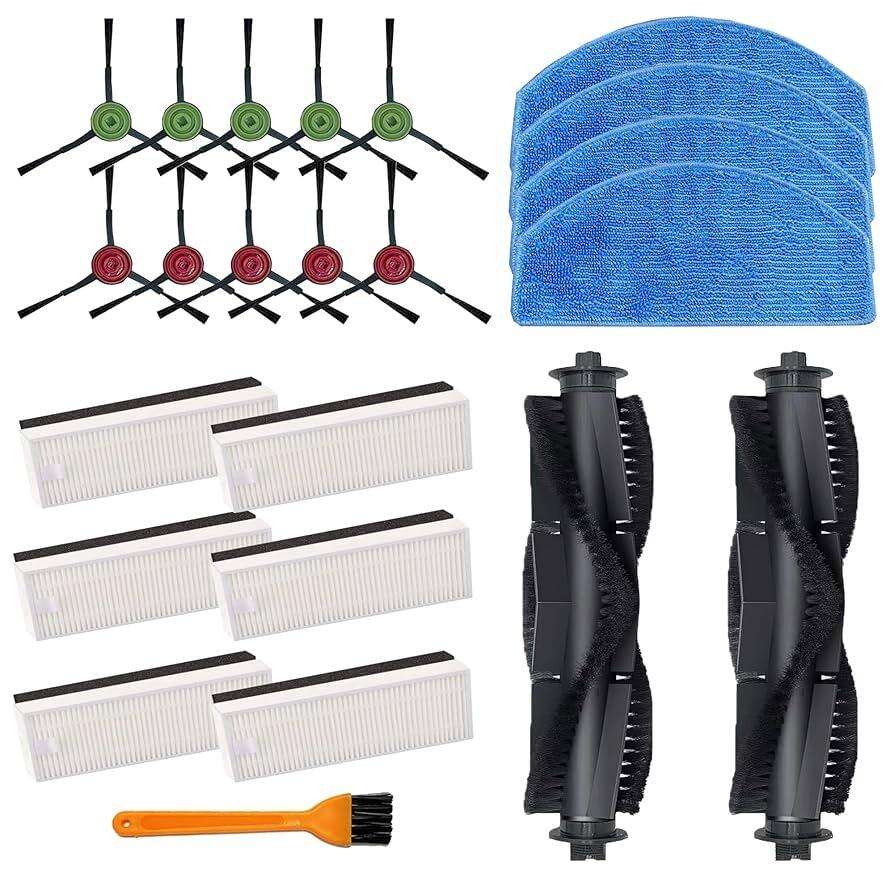
If you are sourcing for an established product category, consider products like the vacuum robot parts sets designed for specific high-demand models as your pilot benchmark. These bundled accessory and consumable sets represent a practical test case because they combine multiple component types, compatibility requirements, and logistics complexity into a single order — giving you a rich data set on the supplier's overall operational capability in a compressed time frame.
FAQ
What is the most important criterion when comparing vacuum robot parts suppliers for long-term cooperation?
While pricing often dominates early conversations, the most important criterion for long-term cooperation is lead time consistency combined with communication quality. A supplier who delivers on time and communicates proactively about any issues protects your operational planning and customer commitments far more effectively than one who offers marginally lower unit costs but introduces delivery uncertainty. Consistent reliability builds the trust that sustains a multi-year partnership.
How do I assess whether a vacuum robot parts supplier can scale with my business growth?
Ask the supplier directly about their current production capacity, their facility expansion plans, and how they have managed volume growth with other key customers in the past. Request references from existing customers who have significantly grown their order volume over time. Also evaluate whether the supplier is actively expanding their catalog to cover new models, as this signals investment in the market rather than maintenance of a static product range.
Should I work with one primary supplier or multiple suppliers for vacuum robot parts?
For most businesses, a hybrid approach works best. Concentrating the majority of your volume with one primary supplier builds relationship depth and often unlocks better pricing and service priority. However, maintaining a secondary supplier for key high-volume SKUs provides supply continuity protection in case of disruption. The balance between concentration and diversification should reflect your risk tolerance and the criticality of each component category to your operations.
How long should a pilot period be before committing to a long-term vacuum robot parts supplier agreement?
A pilot period of three to six months is typically sufficient to observe meaningful performance patterns, including at least one or two complete order cycles and ideally one instance of a problem or deviation to see how the supplier responds. Shorter pilots may not expose logistics variability or seasonal capacity constraints. Longer pilots delay the benefits of a committed partnership. Use the pilot to establish KPIs and review mechanisms so the transition to a formal long-term agreement is grounded in real performance data rather than goodwill alone.
Table of Contents
- Understanding What Long-Term Cooperation Actually Requires
- Evaluating Product Quality and Catalog Compatibility
- Comparing Supply Chain Reliability and Logistics Capability
- Evaluating Communication, Support, and Supplier Stability
- Building a Scoring Framework for Final Supplier Selection
-
FAQ
- What is the most important criterion when comparing vacuum robot parts suppliers for long-term cooperation?
- How do I assess whether a vacuum robot parts supplier can scale with my business growth?
- Should I work with one primary supplier or multiple suppliers for vacuum robot parts?
- How long should a pilot period be before committing to a long-term vacuum robot parts supplier agreement?