 EN
EN
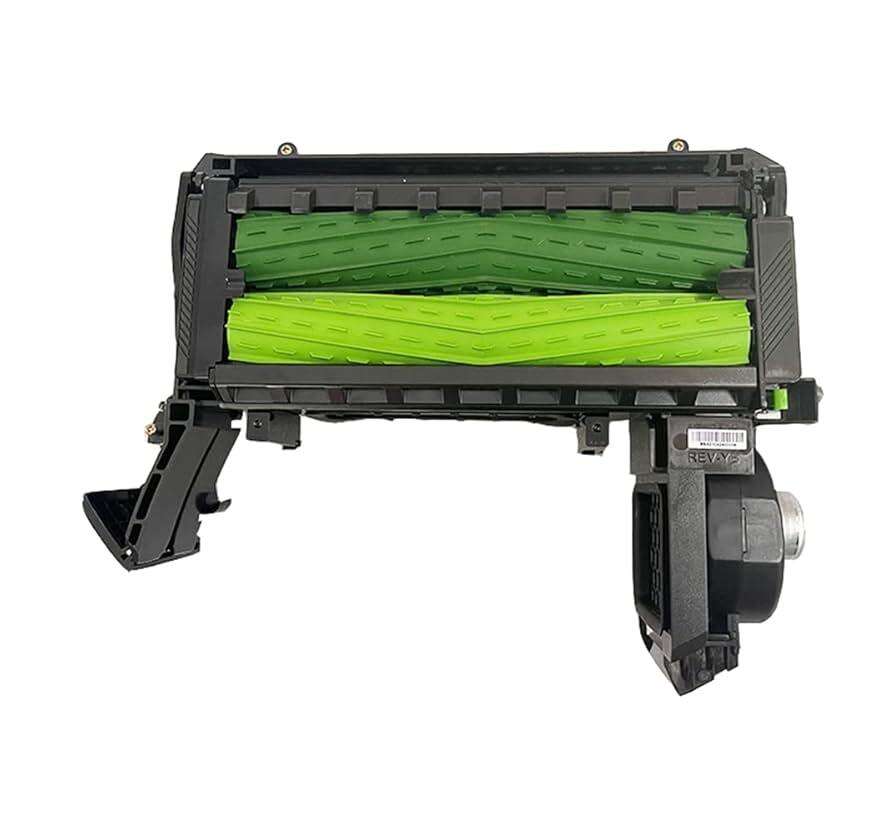
When maintaining or repairing a robotic cleaning device, the source of your replacement components matters far more than most buyers initially realize. robot vacuum parts sourced from well-established manufacturers carry a distinct set of advantages that directly affect performance, longevity, and total cost of ownership. Whether you are a distributor, a service center operator, or a procurement specialist managing a fleet of automated cleaning machines, understanding what sets experienced producers apart is essential to making sound sourcing decisions.
The market for robot vacuum parts has expanded rapidly alongside the global adoption of robotic cleaning technology in both residential and commercial environments. With this growth comes a wide spectrum of suppliers, ranging from well-resourced, experienced manufacturers to low-cost producers with limited quality controls. Established manufacturers occupy a uniquely valuable position in this landscape, offering capabilities and assurances that newer or less experienced suppliers simply cannot match. This article examines those advantages in detail so procurement decision-makers can evaluate their options with greater confidence.
Deep Engineering Knowledge and Product Accuracy
Precision Component Design Built Through Experience
One of the most tangible advantages offered by established manufacturers of robot vacuum parts is their accumulated engineering expertise. Years of designing, testing, and refining components across multiple robot platforms give these producers a level of dimensional accuracy and mechanical understanding that newcomers take years to develop. A side brush spindle, a filter housing, or a main roller brush assembly each must conform to precise tolerances in order to function correctly inside a given robot model.
Experienced manufacturers maintain extensive libraries of design specifications, mold tooling sets, and compatibility data covering dozens or even hundreds of robot vacuum models. This means their robot vacuum parts fit as intended from the moment a technician installs them. There is no need for field adjustments, improvised modifications, or trial-and-error testing to confirm compatibility. The engineering investment is already embedded in every unit that leaves their production floor.
For B2B buyers, this accuracy translates into fewer returns, lower warranty claim rates, and stronger brand trust with end customers. When replacement robot vacuum parts perform identically to original equipment, service providers and distributors protect their professional reputation with minimal operational risk.
Cross-Platform Compatibility Knowledge
Established manufacturers typically support a broad catalog of compatible robot vacuum parts spanning multiple brands and model generations. This cross-platform knowledge is not simply a matter of product variety. It reflects a structural capability to manage component differentiation, track design revisions from original equipment manufacturers, and update production accordingly. A supplier that has been producing robot vacuum parts for a decade will have navigated multiple hardware generations and understands how component requirements shift over time.
This breadth of knowledge also benefits buyers who source components for diverse robot fleets or multi-brand service businesses. Rather than managing relationships with several niche suppliers, procurement teams can consolidate purchasing under one experienced manufacturer that covers their full range of required robot vacuum parts. The operational simplicity and cost efficiency of this consolidation are significant practical advantages.
Consistent Quality Standards and Material Reliability
Controlled Production Processes That Ensure Repeatability
Quality consistency is one of the clearest differentiators between established manufacturers and lower-tier suppliers of robot vacuum parts. Experienced producers have invested in structured quality management systems, incoming material inspection protocols, and process controls that ensure every batch meets the same performance benchmark. This repeatability is critical in B2B supply chains where buyers often place large-volume orders and cannot afford to inspect every unit individually.
Established manufacturers of robot vacuum parts frequently hold ISO certifications or operate under equivalent quality frameworks that formalize their production discipline. These certifications are not just paperwork — they reflect real procedural commitments to dimensional inspection, material traceability, and corrective action systems. When something deviates from specification, the systems in place ensure it is caught before shipment rather than discovered by an end customer in the field.
For procurement professionals, consistent quality across orders eliminates the unpredictability that complicates inventory planning and customer service. Knowing that the robot vacuum parts you ordered this quarter will perform the same as those ordered six months ago is a business advantage that simplifies operations at every downstream level.
Durable Materials Chosen for Long Service Life
Material selection is another area where experience pays tangible dividends. Established manufacturers have accumulated failure data, customer feedback, and durability testing results that inform their material choices for robot vacuum parts. They understand which polymer grades hold up to repeated brush contact, which filter media maintains airflow over hundreds of cleaning cycles, and which rubber compounds survive extended use without degrading in ways that impair suction or navigation.
Newer or lower-cost producers often substitute cheaper materials without fully understanding the long-term performance implications. The result is robot vacuum parts that appear functionally identical at first glance but deteriorate faster, create secondary problems within the robot system, or simply stop performing effectively before their expected service interval. Established manufacturers avoid these pitfalls through disciplined material qualification processes that newer competitors have not yet developed.
For end users and service businesses that depend on reliable robot vacuum parts to maintain client satisfaction, material durability is not a minor consideration. It is central to the value proposition of every component sold.
Supply Chain Reliability and Fulfillment Capability
Inventory Depth That Supports Large and Recurring Orders
Established manufacturers of robot vacuum parts operate at scales that allow them to maintain meaningful finished goods inventory and raw material buffers. This depth is practically important for B2B buyers whose customers expect consistent product availability. A distributor cannot afford to be caught without essential replacement robot vacuum parts during peak demand periods, and a service center cannot delay repairs because a supplier has run out of stock.
Larger, more experienced producers have the financial and operational resources to plan production cycles around buyer demand forecasts, maintain safety stock for high-velocity SKUs, and respond to urgent orders without disrupting their standard fulfillment commitments. This level of supply chain maturity is simply not available from newer, smaller, or less organized suppliers of robot vacuum parts who often operate hand-to-mouth with limited production flexibility.
Supply reliability also has a compounding effect on buyer confidence. When a manufacturer consistently delivers robot vacuum parts on time and in full, buyers increase their commitment to that supplier, negotiate better terms over time, and reduce the administrative burden of managing multiple fallback sources. The reliability premium is real and measurable across a procurement relationship.
Logistics Infrastructure and Global Shipping Capability
Beyond inventory, established manufacturers have typically built logistics infrastructure that supports efficient international shipping, customs compliance, and packaging standards appropriate for different distribution channels. Robot vacuum parts are often fragile, precision-machined, or sensitive to moisture, and their packaging must protect them through international transit while also being practical for final-mile distribution.
Experienced manufacturers understand these logistics realities and have refined their packaging, labeling, and shipping documentation over years of international trade. For buyers in export-intensive markets or those serving geographically diverse customer bases, this logistical competence is a meaningful operational advantage that reduces inbound damage rates, simplifies customs clearance, and supports professional resale presentation of robot vacuum parts.
Technical Support, Documentation, and After-Sales Service
Installation Guidance and Compatibility Documentation
Established manufacturers of robot vacuum parts typically invest in technical documentation that accompanies their products. This includes compatibility charts, installation guides, part number cross-reference databases, and model-specific fitting instructions. For service centers and distributors who handle multiple robot vacuum brands and generations, this documentation infrastructure is genuinely useful and often underappreciated as a sourcing advantage.
The ability to confidently identify the correct robot vacuum parts for a given model, understand proper installation sequence, and communicate product specifications to end customers depends on accurate and accessible documentation. Manufacturers with years of field experience have had time to build and refine this information base in ways that new entrants simply have not. Buyers benefit from this investment without having to develop the information themselves.
Good documentation also reduces the frequency of misinstallation errors, which cause preventable warranty claims and damage to both the parts and the robot units they service. Fewer errors mean lower costs throughout the supply chain — a benefit that flows from the manufacturer's investment in technical communication.
Responsive After-Sales Support for B2B Partners
When issues do arise with robot vacuum parts — whether a batch discrepancy, a compatibility question, or a shipping damage claim — established manufacturers have dedicated account management and after-sales teams equipped to resolve problems efficiently. This responsiveness is a concrete advantage over suppliers who lack the organizational structure to handle B2B service inquiries professionally.
For procurement teams managing high-volume purchasing relationships, the ability to escalate a problem and receive a substantive response within a reasonable timeframe is not a luxury — it is a baseline operational requirement. Experienced manufacturers understand that their B2B partnerships are long-term relationships that require proactive service, not just reactive problem-solving. This service orientation is built through years of managing complex buyer relationships across diverse markets.
Reliable after-sales support also enables buyers to offer stronger service guarantees to their own customers. When a distributor or service center knows that any issue with robot vacuum parts will be addressed by their manufacturer partner without unnecessary friction, they can extend that confidence downstream in the form of credible warranty commitments and responsive customer service.
Innovation Capacity and Product Range Expansion
R&D Investment That Keeps the Catalog Current
Established manufacturers invest in research and development that allows them to introduce new robot vacuum parts aligned with the latest robot platforms as they enter the market. The robotic vacuum industry is technologically dynamic, with hardware updates, new sensor systems, and revised mechanical architectures appearing regularly. A manufacturer that lacks R&D capability will always lag behind, unable to supply replacement robot vacuum parts for the newest models until long after market demand has materialized.
For distributors and service businesses, working with a manufacturer that proactively develops robot vacuum parts for emerging platforms means they can serve customers with recently purchased robots, not just older models. This forward-looking capability differentiates a supplier that is genuinely invested in the market's future from one that merely reacts to established demand.
R&D investment also enables product improvements beyond simple compatibility maintenance. Established manufacturers use field data and customer feedback to refine brush designs, improve filter efficiency, or enhance motor brush durability — incremental improvements that add real value to the robot vacuum parts their customers rely on.
Expanded Accessory and Consumable Sets for Comprehensive Servicing
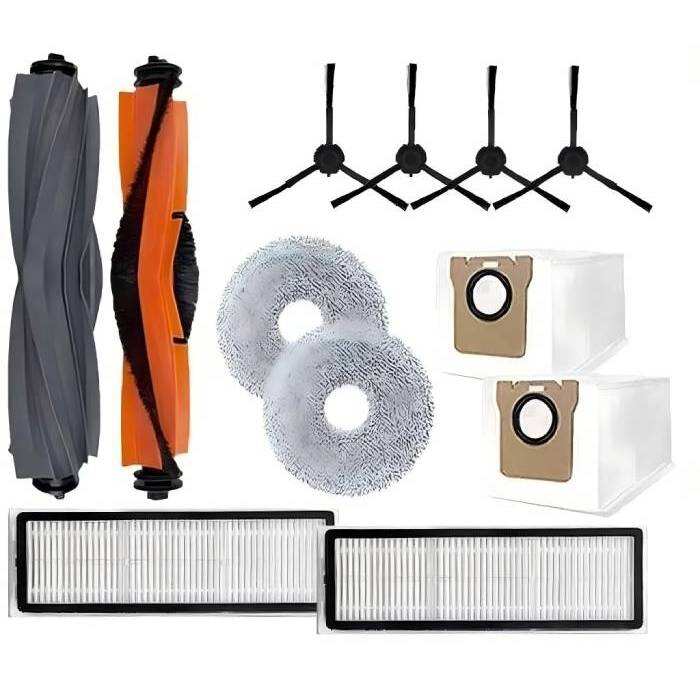
Another advantage of working with an established manufacturer is access to complete accessory and consumable sets that cover all the components a technician or end user typically needs to restore a robot vacuum to full performance. Rather than sourcing individual robot vacuum parts from multiple suppliers, buyers can obtain a consolidated kit that includes brushes, filters, mop pads, and other consumables in a single transaction.
This product packaging strategy reflects the kind of market understanding that only comes with experience. Established manufacturers study how their robot vacuum parts are actually used, which components wear out together, and what combinations make sense as a service bundle. The result is a product offering that aligns with real-world maintenance workflows rather than arbitrary inventory units.
For resellers and service providers, offering complete kits also simplifies their own sales process and increases average transaction value. A customer who needs robot vacuum parts for a comprehensive service is better served by a single complete set than by piecing together components individually — and manufacturers who offer this option demonstrate the commercial intelligence that comes with sustained market engagement.
FAQ
Why does the manufacturer's experience level matter when sourcing robot vacuum parts?
Experience directly affects the dimensional accuracy of robot vacuum parts, the quality of materials used, the reliability of supply, and the depth of technical support available. Established manufacturers have refined their production processes through years of market feedback, which means their components consistently meet performance expectations in ways that newer suppliers often cannot guarantee.
How do established manufacturers ensure compatibility of robot vacuum parts across different models?
They maintain comprehensive design specification libraries, mold tooling archives, and cross-reference databases built over years of supporting multiple robot vacuum brands and model generations. This accumulated knowledge allows them to produce robot vacuum parts that fit correctly and function reliably without requiring field modifications or compatibility guesswork by the installer.
What quality certifications should buyers look for when evaluating suppliers of robot vacuum parts?
ISO 9001 certification is a widely recognized indicator of structured quality management in manufacturing. Beyond formal certifications, buyers should assess whether a supplier has documented inspection protocols, traceable material sourcing, and corrective action procedures. Established manufacturers of robot vacuum parts typically operate under these frameworks as a matter of standard practice rather than exception.
Can purchasing robot vacuum parts in complete accessory sets reduce total procurement costs?
Yes, consolidated accessory and consumable sets typically offer better unit economics than sourcing individual robot vacuum parts separately. Beyond price, bundled sets reduce the administrative complexity of multi-SKU purchasing, simplify inventory management, and ensure that all components needed for a complete service are available together — reducing technician downtime and improving service efficiency.
Table of Contents
- Deep Engineering Knowledge and Product Accuracy
- Consistent Quality Standards and Material Reliability
- Supply Chain Reliability and Fulfillment Capability
- Technical Support, Documentation, and After-Sales Service
- Innovation Capacity and Product Range Expansion
-
FAQ
- Why does the manufacturer's experience level matter when sourcing robot vacuum parts?
- How do established manufacturers ensure compatibility of robot vacuum parts across different models?
- What quality certifications should buyers look for when evaluating suppliers of robot vacuum parts?
- Can purchasing robot vacuum parts in complete accessory sets reduce total procurement costs?