 EN
EN
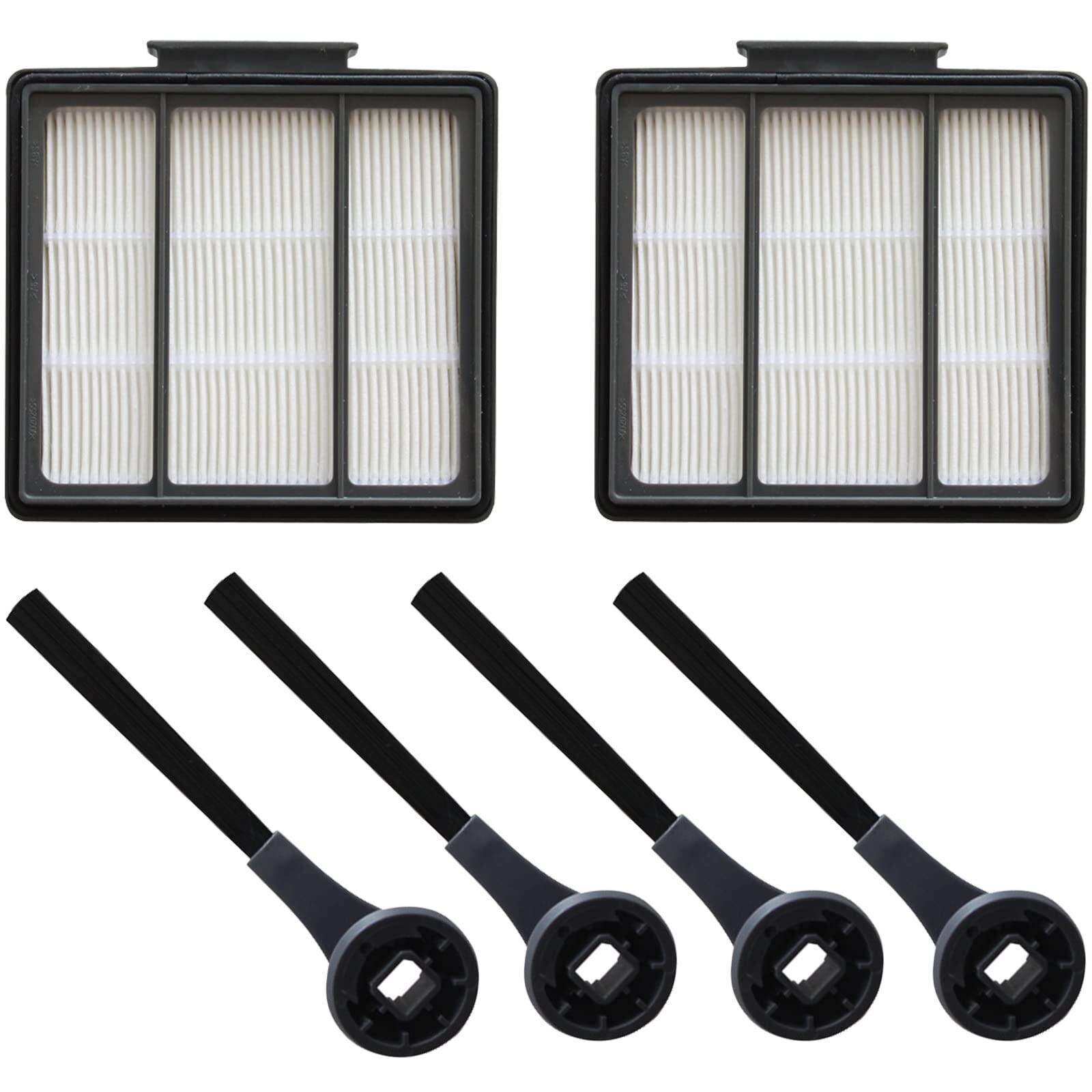
When sourcing components for autonomous cleaning devices, choosing the right robot vacuum parts manufacturer is one of the most consequential decisions an importer can make. The global market for robotic cleaning accessories has expanded rapidly, and with that growth comes an equally rapid increase in the number of suppliers claiming compliance with international standards. Not all of those claims are equally credible, and the consequences of importing non-certified parts can range from customs delays to product liability exposure in the destination market.
Understanding which certifications actually matter — and why they matter for your specific import destination — gives importers a decisive advantage during supplier qualification. A robot vacuum parts manufacturer that holds relevant, verifiable certifications is not just checking a compliance box; it is demonstrating a sustainable commitment to product safety, environmental responsibility, and production consistency. This article walks through the key certification categories importers should scrutinize before finalizing any supply agreement.
Why Certifications Are the Foundation of Supplier Qualification
The Risk Landscape for Imported Robot Vacuum Components
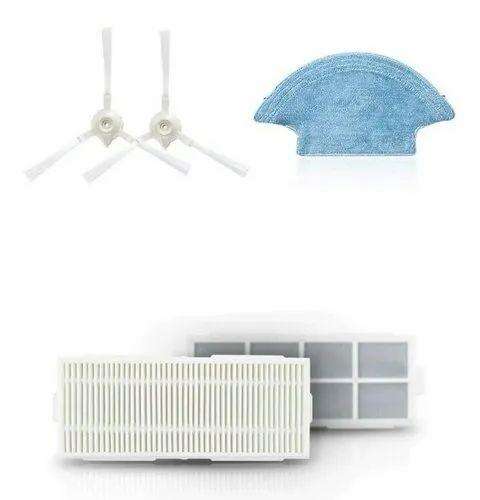
Robot vacuum components — including brush rolls, filter assemblies, side brushes, dustbin units, and charging contacts — are electromechanical parts that interact directly with household environments. This means they carry both electrical safety risks and consumer health implications. A robot vacuum parts manufacturer that lacks proper certification documentation exposes importers to serious regulatory and commercial risk.
In most regulated import markets such as the European Union, the United States, Australia, and Japan, uncertified electronic and electromechanical components can be detained at customs, recalled from retail shelves, or trigger legal liability if they cause damage or injury. The financial and reputational cost of a single recall event can vastly outweigh the short-term savings of working with a cheaper, uncertified supplier.
Beyond regulatory exposure, certification gaps often signal underlying quality management weaknesses. A robot vacuum parts manufacturer that cannot demonstrate third-party testing has typically not invested in the process controls necessary to ensure batch-to-batch consistency — which matters enormously when you are supplying replacement parts that must fit and function reliably in devices already in consumers' hands.
How Certifications Signal Manufacturing Maturity
Certifications are not merely compliance documents. They are evidence of operational discipline. When a robot vacuum parts manufacturer achieves and maintains certifications from recognized third-party bodies, it signals that the company has invested in auditable quality systems, environmental controls, and product testing protocols.
For importers, a certified manufacturer is also a more predictable business partner. Certification bodies conduct regular audits, which means the manufacturer's processes are periodically reviewed and documented. This creates accountability and reduces the likelihood of sudden quality drops or production shortcuts that could affect your product's end-user performance.
When evaluating any robot vacuum parts manufacturer, asking to see original certification documents — not just logos on a website — is a non-negotiable due diligence step. Valid certificates will include the issuing body name, certification scope, certificate number, and expiry date. Any reluctance to share these documents should be treated as a red flag.
Core Electrical Safety Certifications to Verify
CE Marking for the European Market
For importers targeting European Union markets, CE marking is the single most important certification to verify in any robot vacuum parts manufacturer. CE marking indicates that the component meets EU health, safety, and environmental protection standards. It is a legal requirement for placing most electrical and electronic goods on the EU market, and the responsibility for ensuring CE compliance ultimately rests with the importer or the party placing the product on the market.
For robot vacuum components, CE compliance typically involves conformity with the Low Voltage Directive (LVD), the Electromagnetic Compatibility Directive (EMC), and the RoHS Directive. A robot vacuum parts manufacturer that can provide a Declaration of Conformity along with supporting technical files and test reports is demonstrating genuine compliance rather than self-declared marking without evidence.
Importers should request the full technical documentation package, not just the declaration. The test reports behind the CE marking reveal whether the manufacturer has tested the actual components you will be receiving or merely a sample prototype. Discrepancies between test configurations and production configurations are a common source of compliance failure downstream.
UL and FCC Certifications for North American Markets
Importers targeting the United States and Canada need to verify different certifications. UL certification, issued by Underwriters Laboratories, is widely recognized by retailers and distributors in North America as evidence that a component has been independently tested for safety. While UL listing is not always a legal requirement for components, many major retail chains require it as a condition of procurement.
FCC certification is relevant for any robot vacuum parts manufacturer producing components that emit radio frequency energy — which includes wireless charging contacts, Bluetooth modules, and infrared sensors used in navigation systems. Without FCC certification, such components cannot be legally imported into the United States. A robot vacuum parts manufacturer that produces electronic subassemblies for North American markets should hold and be able to present current FCC grant documentation.
For Canada, CSA Group certification plays a similar role to UL in the United States. Importers distributing into both countries should clarify which certification scope their robot vacuum parts manufacturer holds, as the two markets have distinct testing standards in some component categories.
Environmental and Material Compliance Certifications
RoHS and REACH Compliance
Environmental compliance is increasingly central to import qualification, particularly for electronic components. RoHS (Restriction of Hazardous Substances) compliance is mandatory for electronic components sold in the European Union and has been adopted in equivalent form by many other jurisdictions including the UK, China, and South Korea. A robot vacuum parts manufacturer selling to these markets must demonstrate that their components do not exceed threshold limits for lead, mercury, cadmium, hexavalent chromium, and certain brominated flame retardants.
REACH (Registration, Evaluation, Authorisation and Restriction of Chemicals) is a broader EU chemical safety regulation that applies to materials used in manufacturing. Importers should ask their robot vacuum parts manufacturer for REACH declarations covering the materials used in plastic housings, rubber seals, filter media, and other non-electronic components. Non-compliance with REACH can trigger import refusal and product withdrawal obligations.
A credible robot vacuum parts manufacturer will typically be able to provide a Substance of Concern (SoC) declaration and may reference third-party testing reports from accredited laboratories. These documents should align with the actual material specifications of the components you are ordering, not just generic declarations that do not reference specific parts or part numbers.
ISO 14001 Environmental Management Certification
ISO 14001 is an internationally recognized standard for environmental management systems. A robot vacuum parts manufacturer holding ISO 14001 certification has implemented systematic processes for managing its environmental impact, including waste handling, resource consumption, and emissions control. For importers operating under corporate sustainability commitments or ESG reporting obligations, sourcing from an ISO 14001 certified manufacturer supports supply chain transparency goals.
While ISO 14001 is not a product-level certification — it does not directly validate the safety or performance of specific components — it reflects the manufacturer's broader organizational commitment to responsible production. This matters increasingly as buyers face scrutiny from retail customers, institutional procurement departments, and regulatory bodies regarding the environmental credentials of their supply chain.
When reviewing an ISO 14001 certificate from a robot vacuum parts manufacturer, importers should verify the scope statement carefully. The certificate must cover the manufacturing site and the production activities relevant to the components being sourced. A certificate that covers only administrative functions at a head office, for example, may not be relevant to the actual production facility.
Quality Management Certifications and Production Reliability
ISO 9001 Quality Management System
ISO 9001 is the world's most widely adopted quality management standard, and it is arguably the most important process-level certification an importer should look for in any robot vacuum parts manufacturer. ISO 9001 certification means that the manufacturer has established, documented, and maintained a systematic approach to quality control — covering everything from supplier management and incoming inspection to production monitoring and corrective action processes.
For replacement parts that must meet dimensional tolerances and functional specifications consistently across large production volumes, the disciplines embedded in ISO 9001 are directly relevant to the reliability of your supply. A robot vacuum parts manufacturer operating under ISO 9001 is more likely to catch defects early, document root causes, and implement lasting corrective actions rather than simply sorting out visible rejects at the end of the line.
Importers should ask to see both the current ISO 9001 certificate and the scope of certification. The scope should explicitly cover the design or manufacturing of robotic cleaning components. It is also worth asking how recently the manufacturer underwent their last surveillance audit and whether any non-conformances were raised. A cooperative and transparent response to these questions is itself a quality indicator.
IATF 16949 and Industry-Specific Quality Standards
Some robot vacuum parts manufacturer facilities that also supply the automotive or precision electronics sectors may hold IATF 16949 certification, which is the automotive industry's advanced quality management standard. While this standard is not specifically required for robotic cleaning products, its requirements are considerably more rigorous than ISO 9001, and a manufacturer holding IATF 16949 has demonstrated high-level production discipline that benefits all product lines it manufactures.
Importers evaluating high-volume or technically complex component categories — such as precision-molded brush housings, motor subassemblies, or electronic control boards — should consider IATF 16949 as a positive differentiator when comparing suppliers. The production control plan requirements under this standard help ensure that components you receive in shipment 50 will perform the same as those in shipment one.
Beyond formal certification frameworks, importers should ask about any internal quality benchmarks the robot vacuum parts manufacturer applies. Specification sheets, incoming material testing procedures, final inspection protocols, and outgoing quality control (OQC) records are all evidence of practical quality discipline that complements certification documentation.
How to Systematically Verify Certification Claims
Direct Verification with Issuing Bodies
One of the most effective practices for importers is to verify certification claims directly with the issuing body rather than relying solely on documents provided by the robot vacuum parts manufacturer. Most major certification bodies — including TÜV, SGS, Bureau Veritas, UL, and the relevant ISO registrars — maintain online certificate validation portals where certificate numbers can be confirmed in real time.
This step takes very little time and provides strong assurance against the unfortunately common practice of submitting expired, altered, or fictitious certificates. A genuine robot vacuum parts manufacturer will actively support this verification process and provide accurate certificate numbers and issuing body contacts without hesitation.
Importers should build certificate verification into their standard supplier onboarding checklist and set calendar reminders to re-verify before certificate expiry dates. A lapse in certification is not necessarily a disqualifying event, but it should trigger a conversation with the manufacturer about their recertification timeline and any production changes that may have affected their compliance status.
Audit Rights and Factory Inspection Protocols
Certification documents are historical evidence — they tell you what a robot vacuum parts manufacturer achieved at the time of the last audit. For importers with significant volume exposure, complementing certification review with direct factory audits or third-party inspection services provides a real-time picture of current conditions.
A reputable robot vacuum parts manufacturer will typically welcome or at least accommodate supplier audits as a sign of a serious business relationship. Key areas to assess during an audit include the handling and traceability of incoming raw materials, the calibration status of measurement and testing equipment, the documentation practices for in-process quality checks, and the handling procedures for non-conforming materials.
Combining audit findings with certification records gives importers the most complete possible picture of supplier reliability. This two-pronged approach is particularly important for importers placing their first large purchase order with a new robot vacuum parts manufacturer, where historical performance data is not yet available to benchmark against.
FAQ
Which single certification is most important for a robot vacuum parts manufacturer supplying to the EU?
CE marking, supported by RoHS and EMC compliance documentation, is the most critical certification for a robot vacuum parts manufacturer targeting the European Union. Without valid CE conformity documentation, electronic and electromechanical components cannot be legally placed on the EU market, and importers bear direct legal responsibility for ensuring this compliance is in place before products reach distribution.
Can a robot vacuum parts manufacturer self-declare certification without third-party testing?
For some standards such as CE marking, self-declaration is legally permissible under certain directive categories, but it carries significant risk if the supporting technical documentation is inadequate. For higher-risk categories or for markets that require third-party test reports, self-declaration alone is insufficient. Importers should always request the underlying test reports and technical files, not just the declaration, from any robot vacuum parts manufacturer claiming compliance.
How often should importers re-verify a robot vacuum parts manufacturer's certifications?
Importers should verify certifications at initial supplier qualification and then re-verify at least annually or whenever a certificate is approaching its expiry date. It is also advisable to request updated documentation after any significant manufacturing changes such as facility relocation, process updates, or material substitutions, as these changes can affect the validity of existing certifications for that robot vacuum parts manufacturer.
What should an importer do if a robot vacuum parts manufacturer cannot provide original certification documents?
If a robot vacuum parts manufacturer is unable or unwilling to provide original certification documents with issuing body details, certificate numbers, and defined scope, this should be treated as a serious supplier qualification concern. Importers in this situation should either require the manufacturer to complete the relevant certification as a contractual condition before orders are placed, or redirect their sourcing to suppliers who can demonstrate verified compliance from the outset.
Table of Contents
- Why Certifications Are the Foundation of Supplier Qualification
- Core Electrical Safety Certifications to Verify
- Environmental and Material Compliance Certifications
- Quality Management Certifications and Production Reliability
- How to Systematically Verify Certification Claims
-
FAQ
- Which single certification is most important for a robot vacuum parts manufacturer supplying to the EU?
- Can a robot vacuum parts manufacturer self-declare certification without third-party testing?
- How often should importers re-verify a robot vacuum parts manufacturer's certifications?
- What should an importer do if a robot vacuum parts manufacturer cannot provide original certification documents?