
 EN
EN

When importing vacuum robot parts from overseas suppliers, the stakes are higher than most buyers initially realize. A single substandard component—whether a brush roll, dustbin filter, side brush assembly, or charging contact—can compromise the performance of an entire product line, trigger customer returns, or even result in regulatory non-compliance in destination markets. Importers who rush this process without a structured supplier evaluation framework often find themselves facing costly setbacks that damage both margins and brand reputation.
Understanding which standards matter—and how to verify them—is the central challenge for any importer sourcing vacuum robot parts at scale. This article is designed to help B2B buyers, procurement managers, and product sourcing teams identify the precise certification benchmarks, quality management requirements, material safety expectations, and operational performance standards that separate reliable vacuum robot parts suppliers from those that will eventually cause problems. The guidance here is structured around the intent of supplier selection, not generic product description, so every section directly serves the decision you need to make before signing a supply agreement.
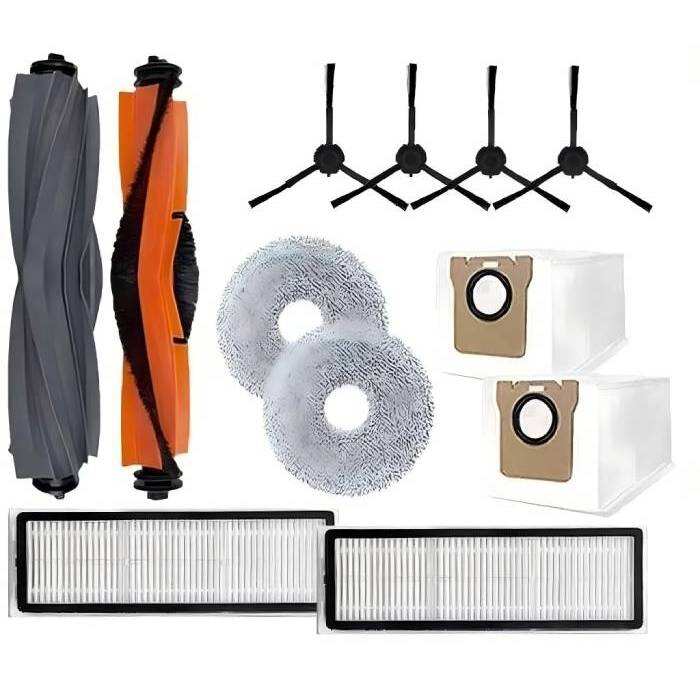
Why Standards Matter More Than Price in Vacuum Robot Parts Sourcing
The Hidden Cost of Non-Compliant Components
Many importers operate under the assumption that vacuum robot parts are relatively low-risk components—replaceable accessories rather than safety-critical parts. This is a dangerous misconception. Filters that do not meet filtration efficiency standards can expose end users to particulate matter. Batteries and charging contacts that bypass electrical safety certifications pose fire and shock hazards. Even mechanical parts like brush rolls made from non-compliant plastics can fail material safety requirements in major markets such as the EU, US, and Australia.
The downstream cost of non-compliance is rarely just a product recall. It includes regulatory fines, loss of market access, liability exposure, and the reputational damage that follows a product safety incident. For importers building a brand around robotic cleaning appliances, the quality of vacuum robot parts sourced from third-party suppliers is directly linked to long-term market viability. Standards are not bureaucratic formalities—they are the minimum acceptable floor for market entry.
Importers who systematically vet suppliers against documented standards gain a concrete procurement advantage. They reduce inspection failures, accelerate customs clearance, and deliver products with fewer warranty claims. When evaluating a new vacuum robot parts supplier, the standards checklist is not optional—it is the foundation of every other due diligence step.
How Standards Define Supplier Competence
A supplier's ability to meet and document compliance with recognized standards is itself a proxy for operational capability. Suppliers who hold relevant certifications have typically invested in process control, equipment calibration, incoming material inspection, and corrective action systems. These are the same capabilities that produce consistent part quality across production runs—which is what importers actually need when placing ongoing orders of vacuum robot parts.
Conversely, suppliers who cannot produce up-to-date certification documentation, who offer vague references to internal testing only, or who resist third-party audits are signaling operational gaps that will eventually affect product quality. The standards framework is therefore both a compliance requirement and a quality signal. Importers should treat the presence or absence of verified certifications as a primary supplier qualification criterion, not a secondary one.
Electrical Safety and EMC Standards for Vacuum Robot Parts
CE Marking and Low Voltage Directive Requirements
For importers targeting European markets, CE marking is a non-negotiable baseline when sourcing vacuum robot parts that include any electrical or electronic functionality. This includes battery packs, charging dock connectors, motor assemblies, sensor modules, and control electronics. The CE mark indicates conformity with applicable EU directives, most relevantly the Low Voltage Directive (LVD) and the Electromagnetic Compatibility (EMC) Directive.
Importers should request the Declaration of Conformity (DoC) for any electrical vacuum robot parts and verify that it references specific harmonized standards such as EN 60335 for household electrical appliances. The DoC should identify the notified body involved in testing where applicable, and test reports should be available for review. Suppliers who provide only a self-declaration without supporting test documentation for high-risk electrical components are presenting incomplete compliance evidence.
It is equally important to confirm that CE documentation is current and covers the exact product model being imported. Some suppliers hold CE certificates for flagship models but apply the same documentation to slightly modified variants. For vacuum robot parts supplied as accessories or replacement components, the relevant conformity documentation should be tied to the specific part SKU, not just the parent device.
UL and FCC Compliance for North American Markets
For importers entering the US and Canadian markets, vacuum robot parts with electrical characteristics must meet safety standards administered by UL (Underwriters Laboratories) or equivalent nationally recognized testing laboratories (NRTLs). Battery components in particular face rigorous scrutiny under UL 2054 for household and commercial batteries, and lithium battery cells used in robotic vacuums are subject to UN 38.3 transportation testing requirements.
FCC compliance is required for any vacuum robot parts that contain radio frequency components, including WiFi modules, Bluetooth chips, or infrared communication systems embedded in replacement sensor arrays. Importers should verify FCC ID registration numbers and confirm that they can be looked up in the public FCC database, which is a straightforward way to validate authenticity without additional testing costs.
Suppliers manufacturing vacuum robot parts for multiple markets should ideally carry both CE and UL documentation. The overlap between international safety requirements is significant enough that dual-certified suppliers typically demonstrate higher overall manufacturing rigor. When a supplier claims dual compliance but cannot produce both sets of documentation simultaneously, importers should treat that as a verification gap requiring clarification before proceeding.
Material Safety and Environmental Compliance Standards
RoHS and REACH Compliance for Component Materials
Vacuum robot parts that are sold or incorporated into products placed on the EU market must comply with the RoHS Directive, which restricts the use of hazardous substances including lead, mercury, cadmium, hexavalent chromium, and certain flame retardants in electrical and electronic equipment. RoHS compliance is required for the complete product as well as individual spare and replacement parts when marketed separately.
REACH (Registration, Evaluation, Authorisation, and Restriction of Chemicals) adds another layer of material compliance, particularly for plastic components, rubber seals, adhesives, and surface treatments used in vacuum robot parts. Suppliers should be able to provide a REACH SVHC (Substances of Very High Concern) declaration confirming that no restricted substances above threshold concentrations are present in their components. Importers sourcing high-volume vacuum robot parts should request material composition data sheets as part of the standard onboarding process.
For brush rolls, HEPA filters, mop pads, and other consumable vacuum robot parts that come into extended contact with household surfaces or air streams, material safety takes on additional significance. Plastics used in these parts should comply with relevant food-contact or indoor air quality standards where applicable, and dye or coating materials should be free from restricted azo compounds and heavy metal pigments.
WEEE Directive and Packaging Compliance
The Waste Electrical and Electronic Equipment (WEEE) Directive in the EU places responsibility on producers and importers to manage end-of-life collection and recycling for electrical components. Importers of vacuum robot parts that contain electronics, batteries, or circuit boards must register under WEEE schemes in the countries where they place these products on the market. A compliant supplier should be able to provide product weight and material classification data to support WEEE reporting requirements.
Packaging compliance is a related but often overlooked area. EU Packaging and Packaging Waste regulations require that packaging materials for vacuum robot parts meet specific recycled content, recyclability, and heavy metal content standards. Importers should request supplier declarations confirming packaging compliance, particularly when the supplier provides retail-ready packaging as part of the product offering. Non-compliant packaging can trigger customs or distribution issues in markets with active enforcement.
Quality Management System Standards for Supplier Qualification
ISO 9001 Certification as a Baseline Requirement
ISO 9001 certification is the most widely recognized indicator that a supplier has implemented a structured quality management system (QMS). For vacuum robot parts suppliers, ISO 9001 certification means the organization has documented processes for design control, production planning, supplier qualification, inspection and testing, nonconformance handling, and continuous improvement. These are the exact process controls that generate consistent part quality across production cycles.
Importers should verify ISO 9001 certificates by checking the issuing certification body and confirming that the certificate scope covers the relevant manufacturing activities—not just administrative or sales functions. A certificate that covers only the sales office of a trading company does not validate the manufacturing quality of the vacuum robot parts being sourced. The scope statement on the certificate should explicitly reference manufacturing or production of the part categories being purchased.
Certificate validity should also be confirmed. ISO 9001 certificates are typically valid for three years with annual surveillance audits. An expired certificate, or one where the last surveillance audit was more than twelve months ago without renewal documentation, raises questions about the supplier's ongoing compliance status. Importers should build certificate expiry tracking into their supplier management processes when dealing with ongoing vacuum robot parts sourcing relationships.
Product-Specific Testing and Inspection Protocols
Beyond ISO 9001, importers should evaluate whether a vacuum robot parts supplier maintains product-specific testing capabilities relevant to their product category. Filter suppliers should demonstrate filtration efficiency testing equipment and reference standards such as EN 1822 for HEPA classification. Motor and brush assembly suppliers should demonstrate torque, endurance, and noise level testing capabilities aligned with applicable IEC standards for small motors and household appliances.
Incoming material inspection protocols are equally important. A supplier who tests finished vacuum robot parts but does not inspect incoming raw materials is controlling quality at the wrong point in the production process. Importers should ask about the supplier's incoming quality control (IQC) procedures, including what materials are tested, what test methods are used, what acceptance criteria apply, and how non-conforming materials are managed and documented.
Pre-shipment inspection arrangements are also worth establishing as a standard practice when sourcing vacuum robot parts. Whether conducted by the importer's own team, a nominated third-party inspection agency, or through agreed factory inspection protocols, pre-shipment verification against an agreed inspection standard gives importers measurable assurance before goods leave the supplier's facility. This is especially important for first orders or when introducing new part specifications.
Intellectual Property and Compatibility Standards
OEM Specifications and Cross-Compatibility Verification
Vacuum robot parts are often designed to replace or complement components from specific robotic vacuum models. Importers sourcing replacement or accessory vacuum robot parts must verify that parts are manufactured to specifications that ensure genuine compatibility with the target device models. This includes dimensional tolerances, connector pin configurations, filter media specifications, brush pile density and stiffness, and battery cell discharge characteristics.
A responsible supplier should be able to provide technical specifications documentation for each vacuum robot parts SKU, including dimensional drawings, material specifications, and test performance data. Where parts are designed to fit specific models, the supplier should also be able to demonstrate that fit and function testing has been conducted against the target device. Importers relying solely on supplier claims of compatibility without supporting technical documentation expose themselves to customer complaints and return processing costs.
Importers should also evaluate whether the supplier respects existing intellectual property rights. Vacuum robot parts that infringe on registered designs, utility models, or patents can expose importers to legal liability in destination markets. Suppliers should be asked directly about their IP clearance processes and whether parts have been reviewed for potential conflicts with registered rights in target markets. This is a due diligence step that is frequently skipped but carries significant commercial risk.
Traceability and Batch Documentation Standards
Traceability is a practical quality standard that becomes critical when a product quality issue arises. Suppliers of vacuum robot parts should maintain production batch records that allow any shipped component to be traced back to its production date, production line, raw material lot, and inspection records. Without traceability, identifying the scope of a quality issue becomes extremely difficult and costly.
Importers should ask suppliers about their batch coding and documentation systems. Parts should carry batch or lot codes that correspond to retrievable production records. When a quality issue is identified in the field, the ability to isolate affected batches and take targeted corrective action is enormously valuable—both for managing the immediate issue and for demonstrating supplier accountability in ongoing supply relationships involving vacuum robot parts.
FAQ
What certifications should I prioritize when evaluating a vacuum robot parts supplier for the EU market?
For the EU market, prioritize CE marking backed by a current Declaration of Conformity referencing relevant harmonized standards, RoHS and REACH compliance documentation, ISO 9001 certification with a scope covering manufacturing, and WEEE registration support documentation. For any vacuum robot parts containing batteries, also verify UN 38.3 test reports for lithium cells. These certifications together provide a comprehensive baseline for EU market entry compliance.
How can I verify that a supplier's certification documents are authentic and current?
Request original certificate copies with issuing body details and verify them directly with the certification body where possible. Most ISO certification bodies maintain online certificate lookup tools. For CE documentation, review the supporting test reports from accredited laboratories, not just the Declaration of Conformity. For FCC compliance, look up the FCC ID in the public FCC database. For vacuum robot parts with UL certification, verify the UL file number on UL's Product iQ database.
Should I require third-party test reports even if a supplier already holds certifications?
Yes, particularly for vacuum robot parts categories with direct safety implications such as batteries, electrical connectors, and HEPA filters. Certifications confirm that a product design met standards at the time of testing, but they do not automatically guarantee that ongoing production maintains those standards. Third-party batch testing or pre-shipment inspection adds a quality control layer that protects importers from production variance and gives added assurance beyond what the certification alone provides.
What red flags should alert me that a vacuum robot parts supplier may not meet the standards I need?
Key red flags include inability to produce original certification documents on request, certificates with scopes that do not cover manufacturing, expired certificates without renewal documentation, refusal to allow factory audits, absence of product-specific technical specifications, no batch traceability system, and vague or inconsistent answers about material compliance. Any supplier of vacuum robot parts who treats compliance documentation as a burden rather than a standard business practice should be approached with significant caution.
Table of Contents
- Why Standards Matter More Than Price in Vacuum Robot Parts Sourcing
- Electrical Safety and EMC Standards for Vacuum Robot Parts
- Material Safety and Environmental Compliance Standards
- Quality Management System Standards for Supplier Qualification
- Intellectual Property and Compatibility Standards
-
FAQ
- What certifications should I prioritize when evaluating a vacuum robot parts supplier for the EU market?
- How can I verify that a supplier's certification documents are authentic and current?
- Should I require third-party test reports even if a supplier already holds certifications?
- What red flags should alert me that a vacuum robot parts supplier may not meet the standards I need?